Volley & net · Swing volley
They back up for your high ball. Do you sneak in?
Your high, heavy ball buys more than three seconds. Spend them walking in, and the ball they send back is slow enough to swing at.
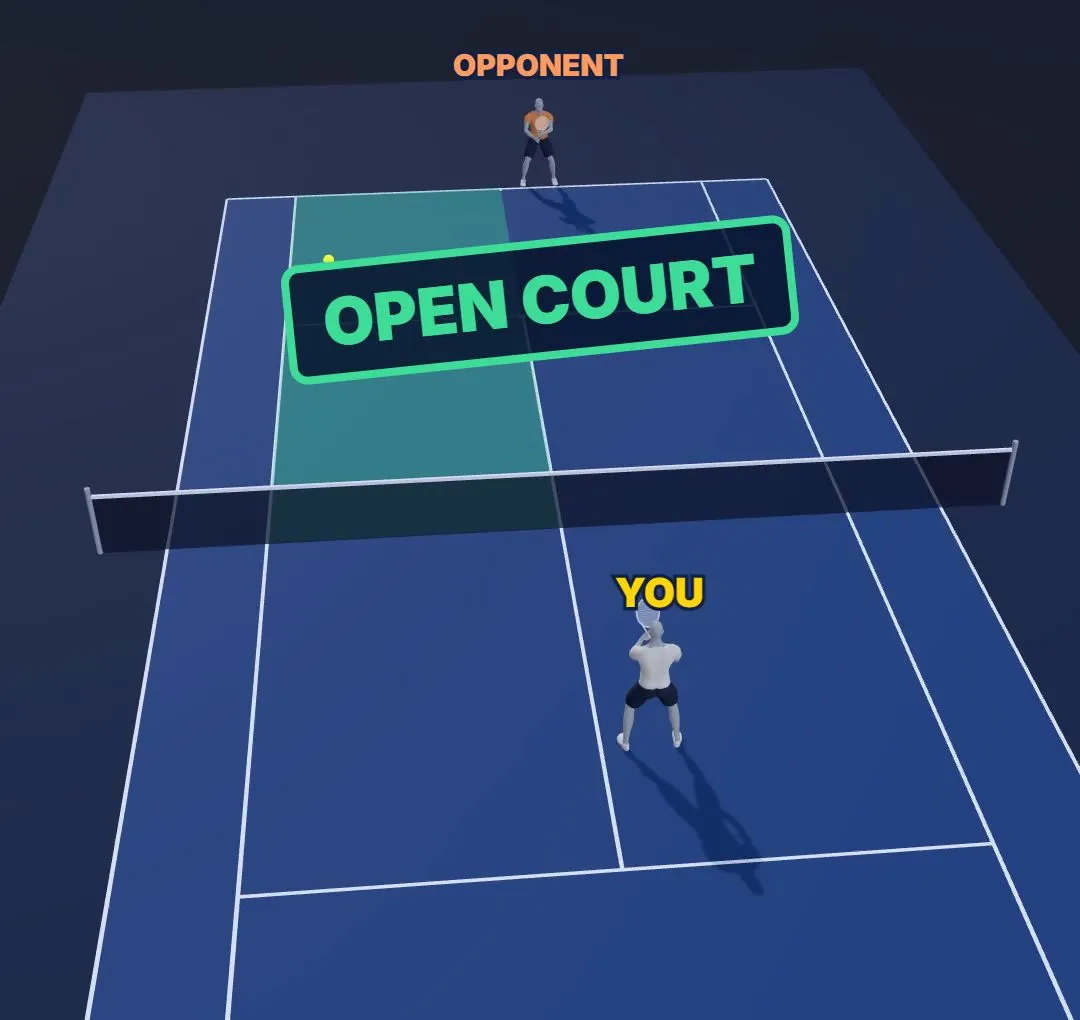
Figure 1. The payoff. You’re inside the service line, they’re behind their baseline, and half their court is open.
What does one high ball buy you?
You’ve just hit a high, heavy ball to their backhand, and they’re backing up to take it above the shoulder. You’re still on your baseline. Stay there and you waste three seconds.
In our model, a 70 km/h ball with heavy topspin clears the net by 3.4 m and takes 1.6 seconds just to bounce. Their reply, hit from above the shoulder with little pace, needs about 1.7 seconds more to reach you. That’s 3.3 seconds, and you only have to cover about 8 m: a light jog. Coaches lift a heavy ball on defense to buy recovery time;1 here you spend the time moving forward.
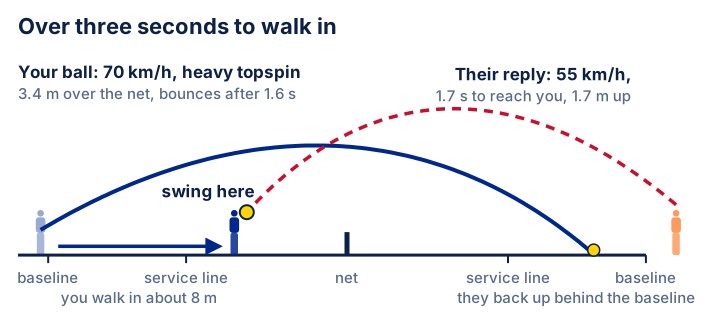
Figure 2. More than three seconds of ball flight, with the time before their swing not even counted.
It’s a known pattern: throw up a high, heavy ball to their weakness, often the backhand, and sneak in behind it.2 So what are you walking into?
What do you swing at, and from where?
A slow ball that sits up. In our model their reply reaches you 1.7 m up at about 43 km/h, well above the 0.9 m net. Take it at about shoulder height, above the net. At net height or lower you have to hit up, and the shot stops being aggressive.3
Meet it at the service line or inside it.3 In Figure 2 you swing about 4 m from the net.
It’s a forehand that doesn’t bounce: open stance, shoulders turned, off arm pointing at the ball, brush up the back for topspin.3 Aim into the open court. You don’t need a line. A ball hit hard to a spot they can’t reach is enough, and any reply will be weak.3
Three ways to ruin the sneak-in
- Deciding late. Recognise the slow ball right away and set up for a forehand.3 If your racket is still down when it arrives, you’ve missed it.
- Swinging at a low ball. Below net height you have to hit up. Save the swing for the ball that sits up.
- Stopping the swing. Near the net it feels wrong to swing all the way through. Do it anyway and extend toward your target.3
Try it this week: the three-second walk
One player on each baseline.
- You hit a high, heavy cross-court ball to your partner’s backhand.
- Your partner answers with a soft, high ball. No pace allowed.
- Walk in, don’t run, and take it out of the air with a swing volley into the open court.
- Ten balls, then swap. Count how many you met above net height.
How we got the numbers
The ball paths come from our ball-flight model, using the drag and topspin-lift coefficients measured by Cross and Lindsey.4 High ball: 70 km/h, 3,000 rpm, hit 1.0 m high and 0.3 m behind your baseline, landing 2 m inside theirs, on an ITF-sized court.5 Reply: 55 km/h, 1,500 rpm, 40 degrees up, hit 2.0 m high and 1.2 m behind their baseline. That reply is our guess at a floater, not a measured shot. The model stops at the first bounce, so the time between your ball bouncing and their swing isn’t counted. Treat the numbers as a guide.
References
-
Frank Giampaolo and Jon Levey, Championship Tennis, Human Kinetics, publisher’s excerpt “Reduce your errors on the court by examining zones.” On defense, elevate shots with heavy topspin to buy recovery time. https://us.humankinetics.com/blogs/excerpt/reduce-your-errors-on-the-court-by-examining-zones ↩
-
Joey Rive and Scott C. Williams, Tennis Skills & Drills, Human Kinetics, publisher’s excerpt “Strategies give players a competitive edge.” Rush and Crush: get the opponent on defense and move in for a swinging or block volley, or throw up a high, heavy ball to the opponent’s weakness and sneak in behind it; the backhand is the most popular weakness. https://us.humankinetics.com/blogs/excerpt/strategies-give-players-a-competitive-edge ↩
-
Mark Dalzell, “How to Hit a Swinging Forehand Volley,” TENNIS magazine, June 2011, tennis.com. Hit from the service line or inside; contact at shoulder height above the net; decide early; forehand-style set-up; finish the swing; any ball hit hard out of reach is enough. https://www.tennis.com/news/articles/how-to-hit-a-swinging-forehand-volley ↩ ↩2 ↩3 ↩4 ↩5 ↩6
-
Rod Cross and Crawford Lindsey, “Tennis Ball Trajectories: The Role of Aerodynamic Drag and Lift in Tennis Shots,” Tennis Warehouse University, 22 December 2013. Drag and spin-lift coefficients. https://twu.tennis-warehouse.com/learning_center/aerodynamics2.php ↩
-
International Tennis Federation, Rules of Tennis 2026, Rule 1 (The Court): 23.77 m long, net 0.914 m high at the centre, service lines 6.40 m from the net. https://www.itftennis.com/media/7221/2026-rules-of-tennis-english.pdf ↩