Singles · Serve game
You hit a good serve. What do you hit next?
In IBM's match statistics, 70% of points were 1 to 4 shots long. So pick your serve, guess the return and decide your next ball before you toss.
Why plan the ball after the serve?
You hit a good wide serve. The return comes back, you’re a step late, and the point is gone two shots later. That’s not bad luck. A Tennis.com feature on IBM’s match statistics reports that 70 percent of points were in the 1 to 4 shot range.1
So the start of the point is most of the point. Tennis.com’s “serve + 1” tip turns it into three steps: prepare (pick the serve), predict (guess the return) and plan (choose your next ball).2
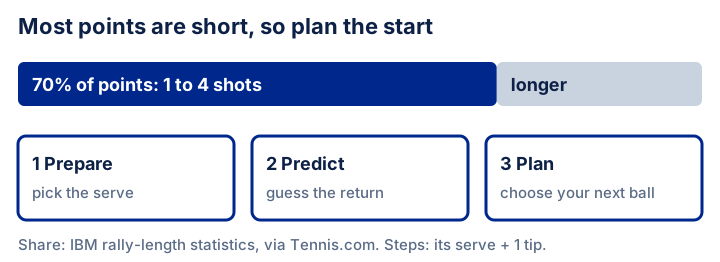
Figure 1. Plan all three before you toss.
Many players stop at step one, yet a strong serve loses much of its value if their next shot takes over the point.2 So how do you guess the return?
Can you really guess the return?
Often, yes. USTA says the high-percentage return to a wide serve is cross-court, and serves at the body or down the T go back through the middle.3 If your opponent plays the percentages, you know where the ball is coming from. Tennis.com adds that returns get easier to anticipate later in a match.2
Where does the next ball go?
Into the court the returner just left. Tennis Skills & Drills describes the goal of pulling an opponent off the court as hitting the next shot into the open court or behind them, to wrong-foot them. Its ingredients are wide serves, angles and a good inside-out forehand.4
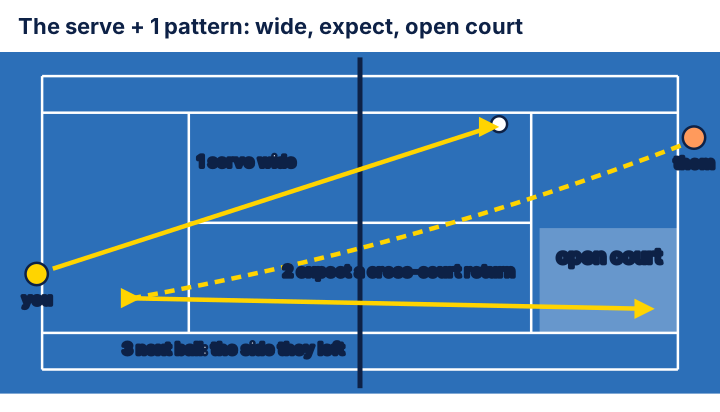
Figure 2. Serve wide, expect the cross-court return, send the next ball to the side they left. Our drawing on an ITF-sized court.
Walk it through. The wide serve pulls them out to the sideline, and they send the ball back cross-court. The side they just left is up to a full court width, 8.2 m, away.5
Four ways to waste a good serve
- Stopping after the serve. The first step is the easy one.2
- Guessing with no evidence. Watch the first few returns, then plan.
- Hitting back into the side they’re on. The open court is the one they just left.
- Planning a shot you can’t hit. The book says to use the strategy that matches the shots you hit consistently and with confidence.4
Try it this week: call it before you toss
- Before each first serve, say it aloud: where you’ll serve, the return you expect, your next ball.2
- Serve and play the point out.
- Score a point for winning it, plus a bonus point if both the return and your next ball were what you called.
- Swap after 10 serves.
How we got the numbers
The 70% is IBM’s rally-length figure as reported by Tennis.com. The feature does not say which matches it covers or whether the serve counts as a shot, so we use it only to show that points are short. The drawing is plain geometry on an ITF-sized court, whose singles court is 8.23 m wide.5
References
-
Steve Tignor, “How Craig O’Shannessy brings the analytics revolution to tennis,” Tennis.com, 17 January 2020. Reports from IBM’s rally-length breakdown that “70 percent of points were in the 1 to 4 shot range.” https://www.tennis.com/news/articles/how-craig-o-shannessy-brings-the-analytics-revolution-to-tennis ↩
-
Liya Davidov, “Tip of the Day: Upgrade your game by adopting the ‘serve + 1’ mentality,” Tennis.com, 8 August 2024. The prepare, predict, plan steps; many players stop after the first; returns become easier to anticipate later in a match; practise knowing why you aim where you do. https://www.tennis.com/baseline/articles/tip-of-the-day-upgrade-your-game-by-adopting-the-serve-1-mentality ↩ ↩2 ↩3 ↩4 ↩5
-
United States Tennis Association, “Tennis strategy: Returning first and second serves,” 6 October 2021. Wide first serves are returned cross-court; serves at the body or down the T are returned to the middle. https://www.usta.com/en/home/improve/tips-and-instruction/national/tennis-strategy--returning-first-and-second-serves.html ↩
-
Joey Rive and Scott C. Williams, Tennis Skills & Drills, Human Kinetics, publisher’s excerpt “Strategies give players a competitive edge.” Pulling an opponent off the court, and choosing the strategy that matches the shots you hit with confidence. https://us.humankinetics.com/blogs/excerpt/strategies-give-players-a-competitive-edge ↩ ↩2
-
International Tennis Federation, Rules of Tennis 2026, Rule 1 (The Court): the singles court is 8.23 m wide and 23.77 m long. https://www.itftennis.com/media/7221/2026-rules-of-tennis-english.pdf ↩ ↩2