Singles · Return game
Their serve is good. Where should your return go?
Return into a corner and the server gets nearly twice the angle to hit back. A deep return through the middle keeps it small, over the lowest part of the net.
Why does the server’s first shot hurt so much?
You get a racket on a big serve. The ball lands near the sideline. The server steps in, flattens the next ball into the open corner, and you never touch it. Bad luck? No. You gave them the angle.
Take their sharpest angle shot: a ball to the far sideline at your service line. From the middle of their baseline it leaves 13° off straight. From out by the sideline it leaves 24°, nearly twice as sharp. That is our own geometry, and it is the whole case for the middle.
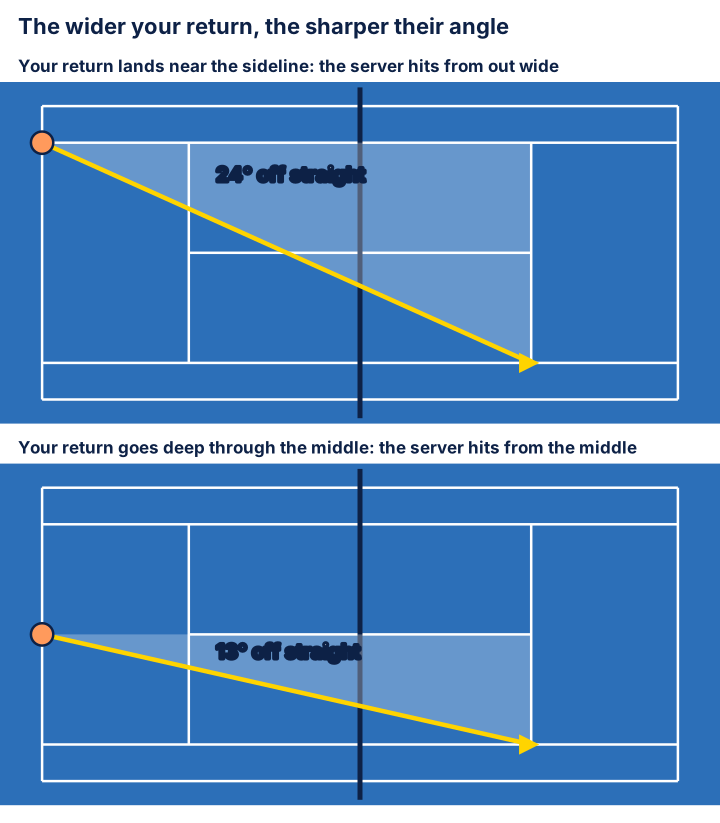
Figure 1. The wider your return lands, the sharper the shot the server can hit back.
So which serves go to the middle?
Which serves go to the middle?
USTA’s rule for a first serve: play the higher percentage shot. A serve at your body or down the T goes back through the middle of the court. A wide serve goes cross-court.1 LTA agrees, and adds that a serve landing mid-box can go up the middle at the server’s feet.2
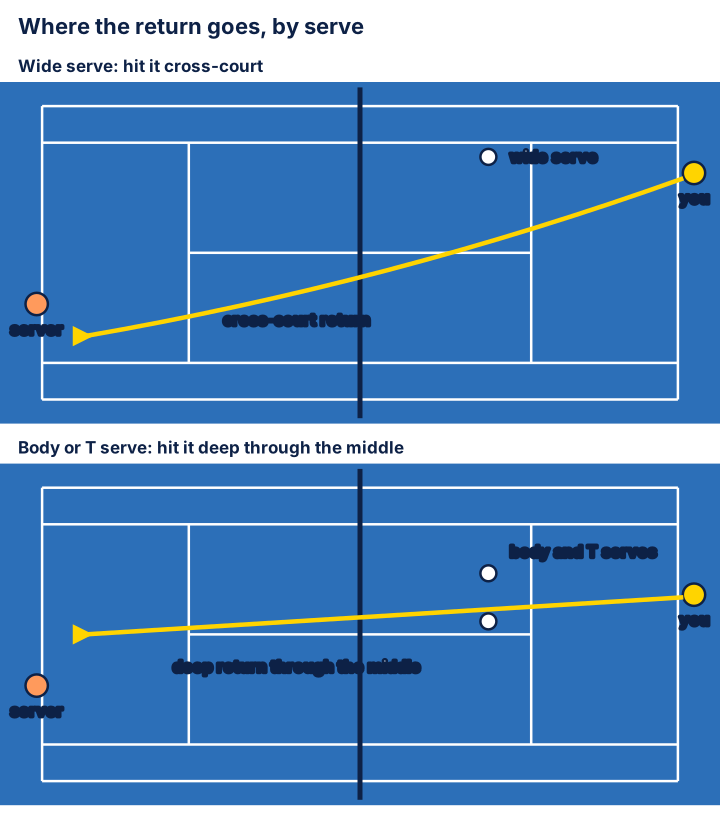
Figure 2. Return directions by serve, as USTA and LTA give them. The drawing is ours.
One coach goes further. Against quick, good movers, he plays the first few balls deep and down the middle: they cover open court well, and the middle cuts your unforced errors.3
A second serve is different. USTA says to step in and hit it with depth and spin.1
Why deep as well?
A short return lands in the middle of their court, where the server can build or attack. A deep one lands in the back zone, where the safe reply is a deep ball.4 The middle also crosses the lowest part of the net: 0.914 m at the centre, 1.07 m at the posts.5
Four returns that give the angle back
- Aiming for the corner on a hard first serve. The net is higher out there and the angle is back.
- A short middle return. It lands where the server can attack.4
- Deep but wide. A deep corner is still a corner.
- Middle against everything. A wide serve goes cross-court.1
Try it this week: the middle strip
- Mark a strip 2.7 m wide down the middle of the server’s side, from their service line to their baseline: 1.4 m either side of the centre mark.
- The server hits first serves. The returner aims every return into the strip.
- Score a point for each return that lands in it. The server must play the ball from where it lands.
- Swap after 10 serves.
How we got the numbers
The angles are plain geometry on an ITF-sized court.5 The shot goes to the far singles sideline at your service line, 18.3 m along the court and either 4.1 m across (from the middle) or 8.2 m across (from a sideline). That gives 12.7° and 24.2°. Real servers hit from many places, so treat the numbers as a guide. The 2.7 m strip is a third of the 8.23 m singles court.
References
-
United States Tennis Association, “Tennis strategy: Returning first and second serves,” 6 October 2021. Wide first serves go cross-court, serves at the body or down the T go to the middle, and on a second serve step in and hit with depth and spin. https://www.usta.com/en/home/improve/tips-and-instruction/national/tennis-strategy--returning-first-and-second-serves.html ↩ ↩2 ↩3
-
Lawn Tennis Association, “Simple steps to improve your return of serve” (undated). Return choices by where the serve lands: down the T through the middle, mid-box up the middle at the server’s feet, wide cross-court over the middle of the net. https://www.lta.org.uk/play/tennis-tips-and-techniques/simple-steps-to-improve-your-return-of-serve/ ↩
-
Steve Annacone, “Tip of the Week: Play the Return of Serve and First Few Balls Deep and Down the Middle,” Long Island Tennis Magazine, 11 July 2019. Why the middle works against fast-moving opponents. https://longislandtennismagazine.com/?p=23408 ↩
-
Frank Giampaolo and Jon Levey, Championship Tennis, Human Kinetics, publisher’s excerpt “Reduce your errors on the court by examining zones.” What the court zone where the ball lands means for the reply. https://us.humankinetics.com/blogs/excerpt/reduce-your-errors-on-the-court-by-examining-zones ↩ ↩2
-
International Tennis Federation, Rules of Tennis 2026, Rule 1 (The Court): the singles court is 8.23 m wide and 23.77 m long, service lines 6.40 m from the net; the net is 1.07 m high at the posts and 0.914 m at the centre. https://www.itftennis.com/media/7221/2026-rules-of-tennis-english.pdf ↩ ↩2