Singles · Attack, neutral, defend
Should you attack this ball? Check two things first
In one study of nationally ranked juniors, poor shot selection caused 46% of match errors and stroke mechanics only 10%. Two things tell you which shot to pick.
Why do most errors start before the swing?
The ball sits up in the middle of the court and your arm itches to go for the line. Wait half a second. In one study of nationally ranked juniors, poor shot selection caused 46% of match errors. Stroke mechanics caused 10%.1
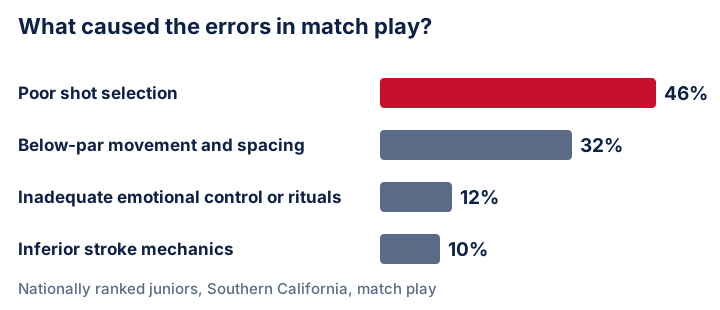
Figure 1. Causes of errors in match play, from one study of nationally ranked juniors described in Championship Tennis.
Most of us practise strokes. The study points at the choice. So what should you look at before you choose?
Which two things decide the shot?
First, where you can play the ball from. The farther inside the baseline you can take it, the more attacking options you have. Scrambling up to the service line for a drop shot? That return is defensive.1
Second, the ball and your balance: its height and how much time you have to set up. The attacking contact point is waist height.1 If you are rushed or off balance, drop one gear (our rule of thumb; the book only says these things change what you can hit).
Then pick the gear:
- Attack: step inside the court, hit at waist height, change the angle or go at their weakness.
- Neutral: match the ball’s speed, build with a secondary shot, clear the net high enough to stay deep.
- Defend: stand farther back, lift the ball with heavy topspin, and just get the point back to neutral.1
Where does the ball land?
Split your half of the court into three even bands, about 3.9 m each. The band the ball lands in tells you your best shot: a safe, deep reply from the back, building or attacking in the middle, finishing at the front.1
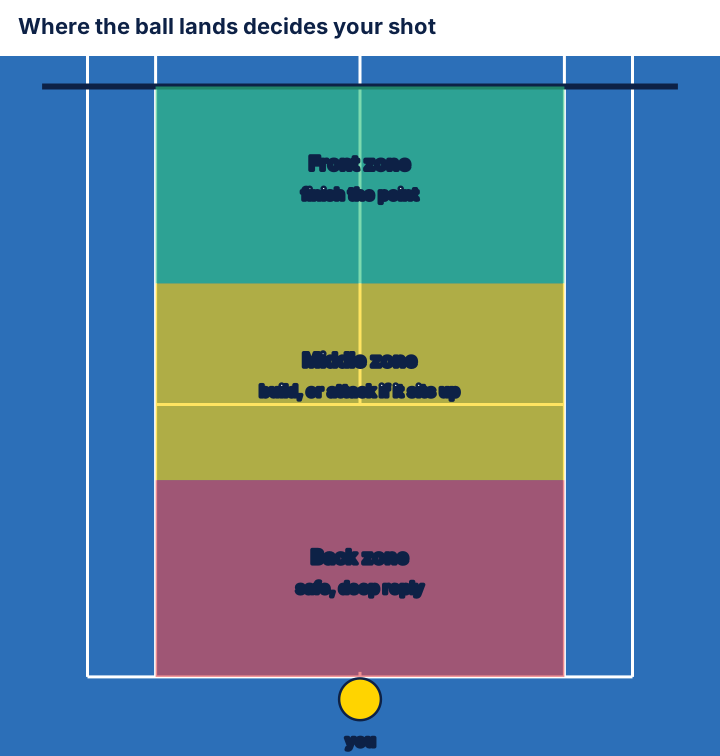
Figure 2. The three bands of your half-court. The book’s zone names are different; the plain labels are ours.
A short, midcourt ball with less pace and more height is the classic invitation. Another strategy book picks exactly that ball for running around your backhand to hit your forehand weapon.2 The bands are grey areas, though: spin, speed and trajectory shift them.1
Four shots that waste a good read
- Going for a winner from the back zone. The book says mature players resist the temptation.1
- Defending a ball you could finish. In the front zone, the correct move is an offensive play.1
- Jumping from defend to attack. The defensive plan ends at neutral.1
- Hitting short, then watching. Your short ball in their front zone means it’s time to defend.1
Try it this week: call the gear
- Rally cross-court with a partner from the baseline.
- The moment the ball bounces on your side, say “defend”, “neutral” or “attack” out loud, then hit that shot.
- After each point, tell each other where you stood and where the ball landed when you made the call.
- Swap after 10 balls.
How we got the numbers
The percentages, heights and zones come from the book’s excerpt.1 The 46% is the author’s own study of nationally ranked juniors, not club players. Each band is a third of one half-court: 11.885 m divided by three is 3.96 m (the book says about 3.9 m, or 13 ft).3 The gear names and the drop-a-gear rule are ours.
References
-
Frank Giampaolo and Jon Levey, Championship Tennis, Human Kinetics, publisher’s excerpt “Reduce your errors on the court by examining zones.” The four causes of errors (46%, 32%, 12%, 10%), the offence, neutral and defence tips, and the three court zones. https://us.humankinetics.com/blogs/excerpt/reduce-your-errors-on-the-court-by-examining-zones ↩ ↩2 ↩3 ↩4 ↩5 ↩6 ↩7 ↩8 ↩9 ↩10 ↩11
-
Joey Rive and Scott C. Williams, Tennis Skills & Drills, Human Kinetics, publisher’s excerpt “Strategies give players a competitive edge.” The short, midcourt ball with slower pace and more height to run around. https://us.humankinetics.com/blogs/excerpt/strategies-give-players-a-competitive-edge ↩
-
International Tennis Federation, Rules of Tennis 2026, Rule 1 (The Court): 23.77 m long, net 0.914 m high at the centre, so each half is 11.885 m. https://www.itftennis.com/media/7221/2026-rules-of-tennis-english.pdf ↩