Singles · Coming forward
Coming to the net: down the line or cross-court?
Down the line keeps the deep passing lane within a step of where you finish. In charted pro matches the edge is small, so the details matter.
Why does the line keep you in the point?
You hit a weapon, they are on defense, and you move in behind it.1 A second later they hit a pass. Whether you are in the right place depends on a choice made before your swing: which way the approach went.
A Tennis.com coaching piece, “Hit Big and Cover the Line,” calls the down-the-line approach the highest-percentage one and the most common on the pro tour. It rushes the opponent into a pass, and the line pass is the safest one to cover as you come in.2
Here is the geometry, ours. Say you hit from 1.6 m inside the sideline and send the ball down it. They reach it by the same sideline. A pass that lands deep in your court has to cross the net inside a strip 3.9 m wide, from that sideline to just past the centre. The middle of the strip is 0.8 m from where you hit, so you finish the approach already in place.
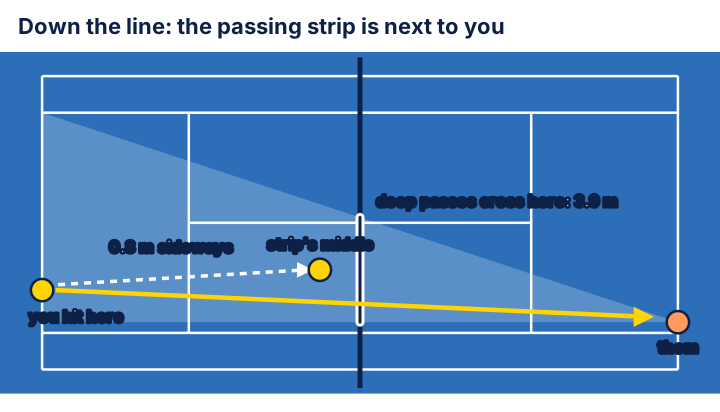
Figure 1. Down the line: the strip of deep passes sits next to you.
Now hit the same approach cross-court.
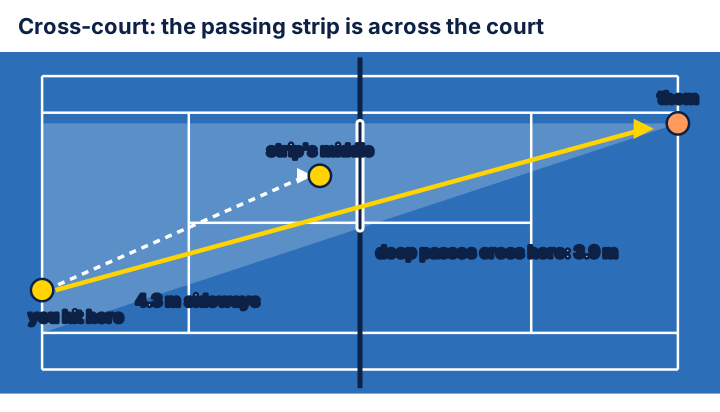
Figure 2. Cross-court: the strip moves to the other side of the court, 4.3 m away.
The strip follows the opponent. You would have to cross the court while moving forward, so the line pass is open. Sharper, shorter passes cross outside the strip; moving forward takes those away, the article says.2
So why isn’t everyone doing it?
What does the line cost?
Margin. The line is 23.77 m long; corner to corner is 25.15 m, so cross-court gives you 1.4 m more room. The net is 1.07 m high at the posts and 0.914 m in the centre.3
Tennis Abstract’s analysis of charted pro matches agrees: line approaches make life harder for the opponent but are higher-risk. For men’s forehand approaches the line wins points 1.7 percentage points more often than cross-court. Men’s backhand approaches show no net difference, and women’s show no edge. It does not control for court position or the shot before.4
So the edge is small, and it depends on how well you hit the ball.
Four ways the net rush backfires
- A soft, short approach. It gives them time. The article’s advice is to hit big.2
- Down the line out of habit. The edge is small and the shot is riskier.4
- Down the line from the middle of the court. Either direction then leaves the strip about 1.8 m from you. The geometry bonus is gone.
Try it this week: approach and cover
- A partner feeds a short ball to your forehand side.
- Hit the approach down the line, deep, and move in. Split-step as they hit.
- The partner tries to pass. Play the point out.
- After 10 balls, repeat hitting cross-court. Count the passes that got by each time.
How we got the numbers
The drawings use an ITF-sized court, 23.77 m long and 8.23 m wide for singles.3 We assume you hit from 1.6 m inside the sideline and they reach the ball 0.4 m inside the opposite one. A deep pass is one that ends on your baseline between the line they are on and the far corner; we find where those passes cross the net. Treat the numbers as a guide.
References
-
Joey Rive and Scott C. Williams, Tennis Skills & Drills, Human Kinetics, publisher’s excerpt “Strategies give players a competitive edge.” “Rush and crush”: get an opponent on defense with a weapon and move in. https://us.humankinetics.com/blogs/excerpt/strategies-give-players-a-competitive-edge ↩
-
Tennis.com, “The Modern Approach: Hit Big and Cover the Line,” 24 October 2013 (no byline on the page). The down-the-line approach as the highest-percentage one, rushing the pass, covering the line pass and taking away the cross-court pass by moving forward. https://tennis.com/news/articles/the-modern-approach-hit-big-and-cover-the-line ↩ ↩2 ↩3
-
International Tennis Federation, Rules of Tennis 2026, Rule 1 (The Court): 23.77 m long, singles court 8.23 m wide; the net is 1.07 m high at the posts and 0.914 m at the centre. https://www.itftennis.com/media/7221/2026-rules-of-tennis-english.pdf ↩ ↩2
-
Jeff Sackmann, “Where Should You Hit An Approach Shot?”, Heavy Topspin (Tennis Abstract blog), 15 October 2026. Down the line is higher-risk; men’s forehand approaches gain 1.7 percentage points, no net difference for men’s backhand or for women. https://www.tennisabstract.com/blog/?p=7687 ↩ ↩2