Serve · Serve types
Kick, slice or flat: where does the toss go?
Many top players hit kick, slice and flat from one toss. Everyone else moves the toss, and the point where the strings meet the ball moves with it.
Can you hit all three from one toss?
You’re serving at 4-4 and you want the slice out wide. Your hand throws the ball where it always throws it. Wrong spot, wrong serve.
A column on a sports retailer’s blog says many top players can hit flat, slice and kick from one toss, but most of us need the toss in a different place for each.1 Even at the top the swing isn’t identical. In a motion-capture study of 12 high-performance men, the racket was moving sideways at 10.2 m/s at impact on the kick serve and 1.4 m/s on the flat serve, and its peak speed was lower on the kick, 40.3 against 43.2 m/s. The authors linked these differences to the different toss locations.2
So where does the ball go for each serve?
Where does the toss go?
Flat: out in front. Toss it slightly in front so you can lean into the ball for power.1 In the study the flat toss was further forward than the kick toss, and players hit the flat serve with minimal spin.2
Slice: a little to the right (right-hander). Meet the ball at 2 to 3 o’clock on an imaginary clock face. The strings brush the side and the ball gets side spin.1 The LTA likens it to a frisbee: it floats, and it is harder to read off the court.3
Kick: over your head, a little left. Meet it at 7 o’clock, brushing up the back of the ball for topspin.1 The LTA says to toss slightly back, and that the topspin gives height over the net, so you can hit it faster and still keep it in.3
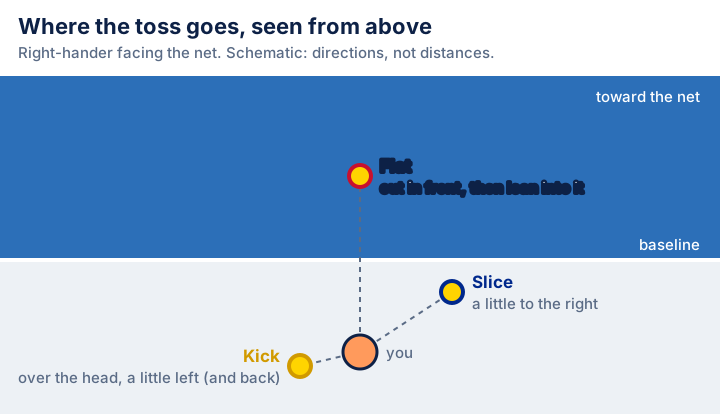
Figure 1. Directions from the sources, not distances.
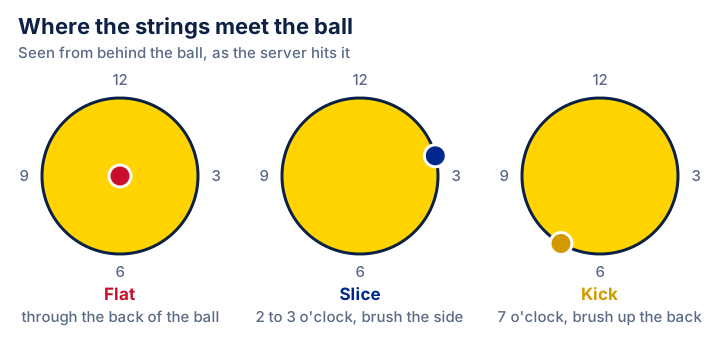
Figure 2. Where the strings meet the ball. We read the clock as seen from behind the ball.
What does that contact do to the ball?
What does the contact do to the ball?
In our model4 a flat 170 km/h serve and a 135 km/h kick can land in the same spot. The kick clears the net by 0.49 m against 0.16 m and comes down steeper, at about 18 degrees against 13. A steeper landing means a higher bounce, and the LTA calls kick serves hard to attack, especially into the backhand, because the ball jumps up.3
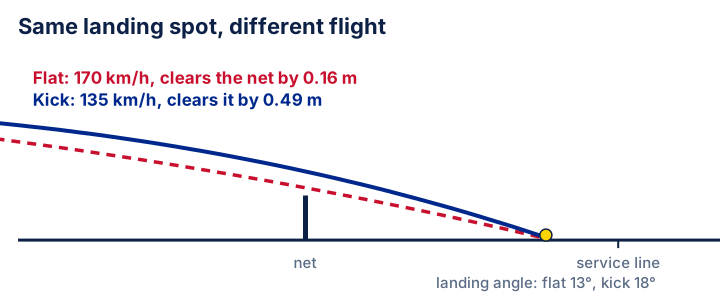
Figure 3. The kick buys net clearance and a steeper drop. The slice’s side spin bends the ball sideways, which a side view can’t show.
Three ways the toss goes wrong
- One toss for three serves. The toss is the most common problem at every level, and even top players abort a serve when the ball is in the wrong place.1
- Using the flat toss for a kick. A kick is struck at 7 o’clock, up the back of the ball, so the ball must be over your head and a little left, not out in front.1
- Stopping at one serve. Being able to hit all three keeps the returner guessing and gives you more options.1
Try it this week: toss targets
Put three markers on the ground, one for each serve: out in front, a little right, and under the kick toss. Toss ten balls at each and let them drop onto the marker. The column’s tip: you can do this anywhere, even in your living room.1
How we got the numbers
Figures 1 and 2 are schematics drawn from the directions in the sources; they give no distances. The racket speeds are means for 12 right-handed high-performance men.2 Figure 3 is our ball-flight model with the drag and spin-lift coefficients of Cross and Lindsey: both serves leave the racket 2.7 m up and land 16.9 m from the server. The spin rates, 1,200 rpm for the flat serve and 3,800 rpm for the kick, are our assumptions. Treat the numbers as a guide.
References
-
Chris Wilkinson, “On the Court | The Keys to a Good Tennis Serve with Chris Wilkinson,” Sweatband Active blog, 20 May 2021. Toss slightly in front for the flat serve; slightly right and contact at 2 to 3 o’clock for the slice; above the head, slightly left, contact at 7 o’clock for the kick; many pros hit all serves from one toss. https://www.sweatband.com/blogs/active/on-the-court-the-keys-to-a-good-tennis-serve-with-chris-wilkinson ↩ ↩2 ↩3 ↩4 ↩5 ↩6 ↩7 ↩8
-
Machar Reid, Bruce Elliott and Jacque Alderson, “Shoulder joint loading in the high performance flat and kick tennis serves,” British Journal of Sports Medicine 41(12):884-889, 2007. Twelve right-handed high-performance men; racket speeds, flat toss further forward, kick toss more lateral. https://doi.org/10.1136/bjsm.2007.036657 ↩ ↩2 ↩3
-
Matt Smith, LTA, “How to improve your second serve: Expert tips & techniques” (undated). Slice spins horizontally like a frisbee and floats; kick toss slightly back with a brush up the back of the ball; kick serves are hard to attack. https://www.lta.org.uk/play/tennis-tips-and-techniques/how-to-improve-your-second-serve/ ↩ ↩2 ↩3
-
Rod Cross and Crawford Lindsey, “Tennis Ball Trajectories: The Role of Aerodynamic Drag and Lift in Tennis Shots,” Tennis Warehouse University, 22 December 2013. Drag and spin-lift coefficients; with side spin the lift force acts sideways. https://twu.tennis-warehouse.com/learning_center/aerodynamics2.php ↩