Tennis science · Vision and reaction
Can you really watch the ball onto your strings?
Eyes can smoothly track a target only up to about 100 degrees per second. At contact a rally ball would need over four times that. Here's where to look.
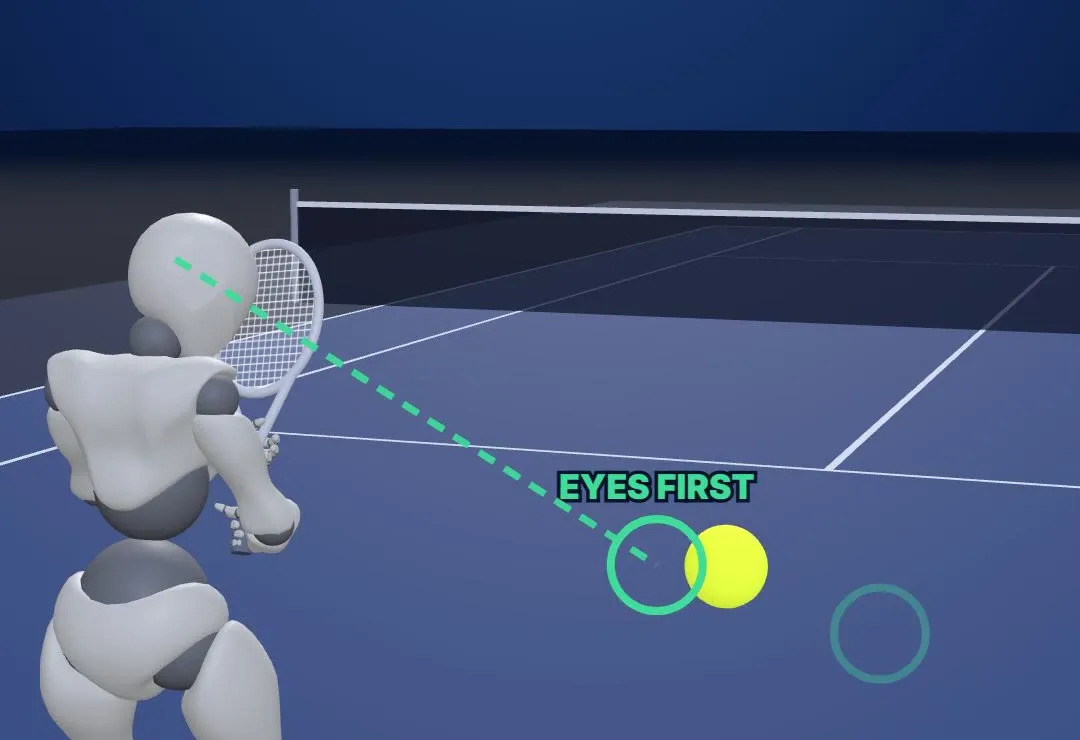
Figure 1. The green ring is where this hitter’s eyes already are. The ball hasn’t arrived yet. (Mannequin, 3D illustration.)
How fast does the ball cross your view?
“Watch the ball onto the strings,” says every coach. So you try: a 100 km/h rally ball, eyes locked on, and somewhere near the end your eyes fall behind it.
What matters isn’t the ball’s speed. It’s how fast the line from your eyes to the ball turns. In our model that is slow while the ball is far (30 degrees per second at 8 m from your contact point) and fierce up close: 153 at 1 m, 434 at contact.
Your eyes can’t match that. In a lab test, people tracked a moving dot smoothly at about 90% of its speed up to 100 degrees per second, then their eye speed stopped rising.1
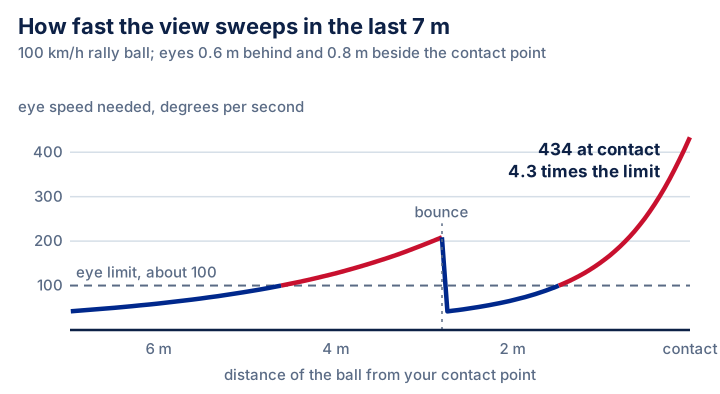
Figure 2. Red is more than the eyes can give: the 0.1 s before the bounce, and the last 1.5 m (0.13 s) before contact.
That’s the eyes alone, and a head turn takes some of the load. But even with your eyes 2.2 m from the ball at contact, the model still asks for twice the limit.
So what do good hitters do instead?
Where do good hitters look?
The best evidence comes from cricket, where the ball also bounces just before the bat. Batsmen watched the ball leave the bowler’s hand, jumped their eyes to where they expected it to bounce, waited, and followed it for only 100 to 200 ms after the bounce.2
Elite batters made two jumps ahead: first to the bounce spot, then to the spot where bat would meet ball. They also turned their heads with the ball.3
Cricket is faster, but the problem has the same shape: a bounce, then a split second. In our model, the eyes can follow a tennis ball for about 0.1 s after the bounce before it passes the limit again.
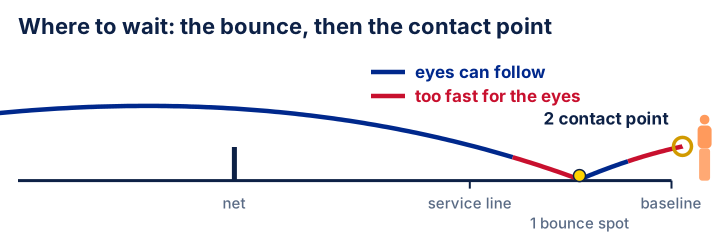
Figure 3. Two places to look: the bounce spot, then the contact point.
So what’s the rule?
Follow the ball early, from your opponent’s racket to just after the bounce. Then send your eyes to the spot where you’ll hit it, and let the ball come to them.
Three ways to chase the ball wrong
- Chasing it into the strings. The last 0.13 s is where your eyes fall behind, however hard you try.
- Jumping too soon. Most of the flight is easy to follow, until 0.34 s before contact in our model. Use that time to read where the ball is going.
- Using your eyes alone. Turn your head with the ball, as the elite batters did.3
Try it this week: eyes to the spot
- Rally cross-court at an easy pace.
- Follow the ball off your partner’s racket. As it bounces, jump your eyes to the spot where you’ll hit it.
- Keep them there until the ball arrives. Do 10 balls, then rally normally and notice what changed.
How we got the numbers
The ball path comes from our model with Cross and Lindsey’s drag and lift numbers:4 100 km/h, 2,000 rpm of topspin, hit from 1.0 m high and landing 2.5 m inside the baseline. After the bounce it keeps 75% of its vertical speed5 and 65% of its horizontal speed (our assumption). Eye speed is how fast the eye-to-ball line turns, with the eye 0.6 m behind the contact point, 0.8 m to the side and 1.6 m high. The 100 degrees per second comes from five people in a lab; some do better.
References
-
C. H. Meyer, A. G. Lasker and D. A. Robinson, “The upper limit of human smooth pursuit velocity,” Vision Research 25(4):561-563, 1985. In four of five subjects eye velocity was about 90% of target velocity up to 100 deg/s, then saturated. https://doi.org/10.1016/0042-6989(85)90160-9 ↩
-
M. F. Land and P. McLeod, “From eye movements to actions: how batsmen hit the ball,” Nature Neuroscience 3(12):1340-1345, 2000. Batsmen watch the release, make a predictive saccade to the expected bounce point, wait, and follow the ball for 100-200 ms after the bounce (abstract). https://doi.org/10.1038/81887 ↩
-
D. L. Mann, W. Spratford and B. Abernethy, “The head tracks and gaze predicts: how the world’s best batters hit a ball,” PLoS ONE 8(3):e58289, 2013. Two elite batters coupled head rotation to the ball and usually made two predictive saccades, to the bounce location and to the bat-ball contact location (abstract). https://doi.org/10.1371/journal.pone.0058289 ↩ ↩2
-
Rod Cross and Crawford Lindsey, “Tennis Ball Trajectories: The Role of Aerodynamic Drag and Lift in Tennis Shots,” Tennis Warehouse University, 22 December 2013. Drag and spin-lift coefficients for the ball path. https://twu.tennis-warehouse.com/learning_center/aerodynamics2.php ↩
-
Rod Cross, “Tennis physics, anyone?,” Physics Today 61(9):84-85, September 2008. A ball bouncing on a hard court rebounds at about 0.75 of its vertical incoming speed. https://aip.brightspotcdn.com/PTO.v61.i9.84_1.online.pdf ↩