Tennis science · Biomechanics
If your arm swings the racket, why use your legs?
One biomechanics table gives the arm joints all of the racket's speed at contact. Yet serves got slower without leg drive. The answer is in the timing.
Watch a good serve in slow motion. The knees bend, the hips turn, the shoulders follow, and only then does the arm fly. Now look at the table that splits up the racket’s speed at the moment of contact.
Does the arm make all the racket speed?
At the last instant, nearly. In his review of tennis biomechanics, Elliott lists approximate contributions to racket speed at impact. On a power serve, 40% comes from turning the upper arm inward at the shoulder, 30% from the hand, 15% from swinging the upper arm across, 10% from the shoulder and 5% from forearm pronation. On a topspin forehand it is 40% upper-arm turn, 25% arm swing, 20% hand and 15% shoulder.1
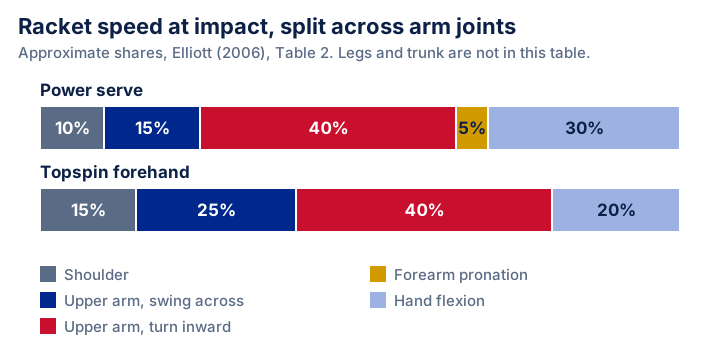
Figure 1. The table covers only the last links of the chain. Legs and trunk work earlier.
So why do coaches talk about legs?
What do the legs and trunk add?
Speed for the arm to build on. Elliott’s chain starts with leg drive and trunk rotation giving the shoulder its speed. Each link then adds to the one before, up to the racket. On strokes where power matters, many segments work in sequence. On precision strokes like a volley, fewer segments work more as a unit.1
Take the legs away and the racket slows. Twelve high-performance men served with a foot-up leg drive, a foot-back leg drive, and minimal leg drive. Peak racket speed was 43.6 and 42.6 m/s with leg drive, against 39.4 m/s without (about 10% lower than the foot-up serve).2
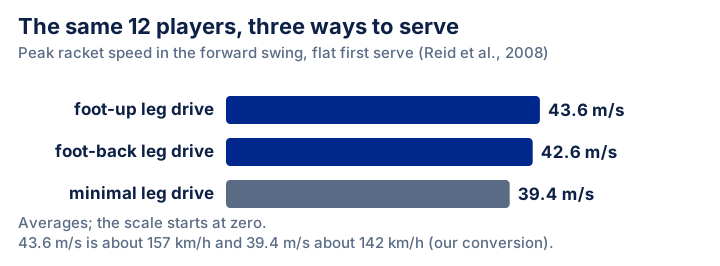
Figure 2. Same players, same serve, different leg drive.
More leg power doesn’t explain it, though. In a study of 32 players, beginners, intermediates and elites had the same jump power, yet the elites’ top serves averaged 169 km/h against 107 km/h for beginners. The elite pushed harder into the ground (2.1 against 1.7 times body weight) and their leg muscles peaked earlier in the push.3
So if raw power isn’t it, what is?
Is it power or timing?
Landlinger and colleagues recorded the forehands of six professionals and seven top-15 national juniors. Peak rotation speeds of the pelvis and trunk were similar. What differed was when they peaked: the pros’ pelvis 75 ms before contact and trunk 57 ms before, the juniors’ 93 and 75 ms before. The pros’ whole chain fired 18 ms later, and their racket was a little faster (33.1 against 31.1 m/s, which the authors call a tendency).4
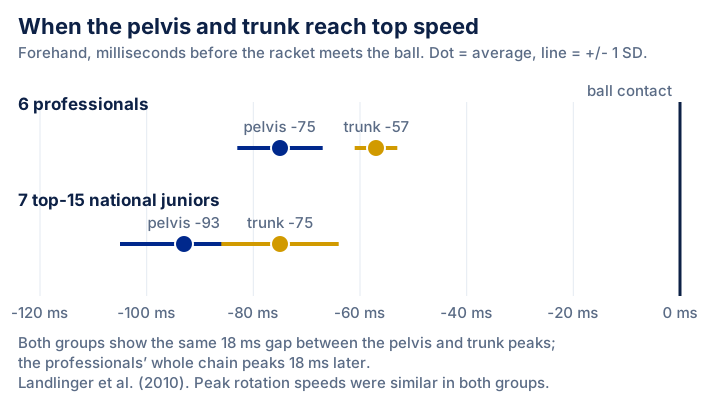
Figure 3. The same peaks, later. Six against seven players, so treat it as a clue.
Waiting is costly too. In a lab arm movement Elliott cites, upper-arm turning was about 20% faster with no pause than after a 1.5-second pause, so only a short pause between backswing and forward swing makes sense.1
Three ways to break the chain
- Swinging with the arm alone. Serve racket speed dropped without leg drive.
- Pausing at the end of the backswing. In the lab, no pause gave about 20% faster arm turning than a 1.5-second pause.
- Training leg strength and nothing else. Same jump power, very different serves.
Try it this week: feel the order
- Shadow-swing at about a third of full speed, saying “legs, hips, chest, arm” as each part starts.
- Keep it one continuous loop, with no stop between the backswing and the forward swing.
- Hit ten feeds at half pace in that order. Add speed only while the order survives.
References
-
Bruce Elliott, “Biomechanics and tennis,” British Journal of Sports Medicine 40(5):392-396, 2006. Table 1 (kinetic chain, power and precision strokes), Table 2 (contributions to racket speed at impact) and the pause finding. https://doi.org/10.1136/bjsm.2005.023150 ↩ ↩2 ↩3
-
M. Reid, B. Elliott and J. Alderson, “Lower-limb coordination and shoulder joint mechanics in the tennis serve,” Medicine & Science in Sports & Exercise 40(2):308-315, 2008. 12 high-performance men; foot-up, foot-back and minimal leg drive serves. https://doi.org/10.1249/mss.0b013e31815c6d61 ↩
-
O. Girard, J. P. Micallef and G. P. Millet, “Lower-limb activity during the power serve in tennis: effects of performance level,” Medicine & Science in Sports & Exercise 37(6):1021-1029, 2005. 32 players in three skill groups; jump power, ground force, serve speed. https://pubmed.ncbi.nlm.nih.gov/15947729/ ↩
-
J. Landlinger, S. Lindinger, T. Stöggl, H. Wagner and E. Müller, “Key factors and timing patterns in the tennis forehand of different skill levels,” Journal of Sports Science and Medicine 9(4):643-651, 2010. Six professionals and seven top-15 national juniors; timing of peak pelvis and trunk rotation. https://pmc.ncbi.nlm.nih.gov/articles/PMC3761808/ ↩