Rules & etiquette · Lets and hindrance
A ball from your own side trips you. Is it a let?
Two stray balls can stop a point, but only one earns a replay. And stopping to be fair to your opponent can cost you the point.
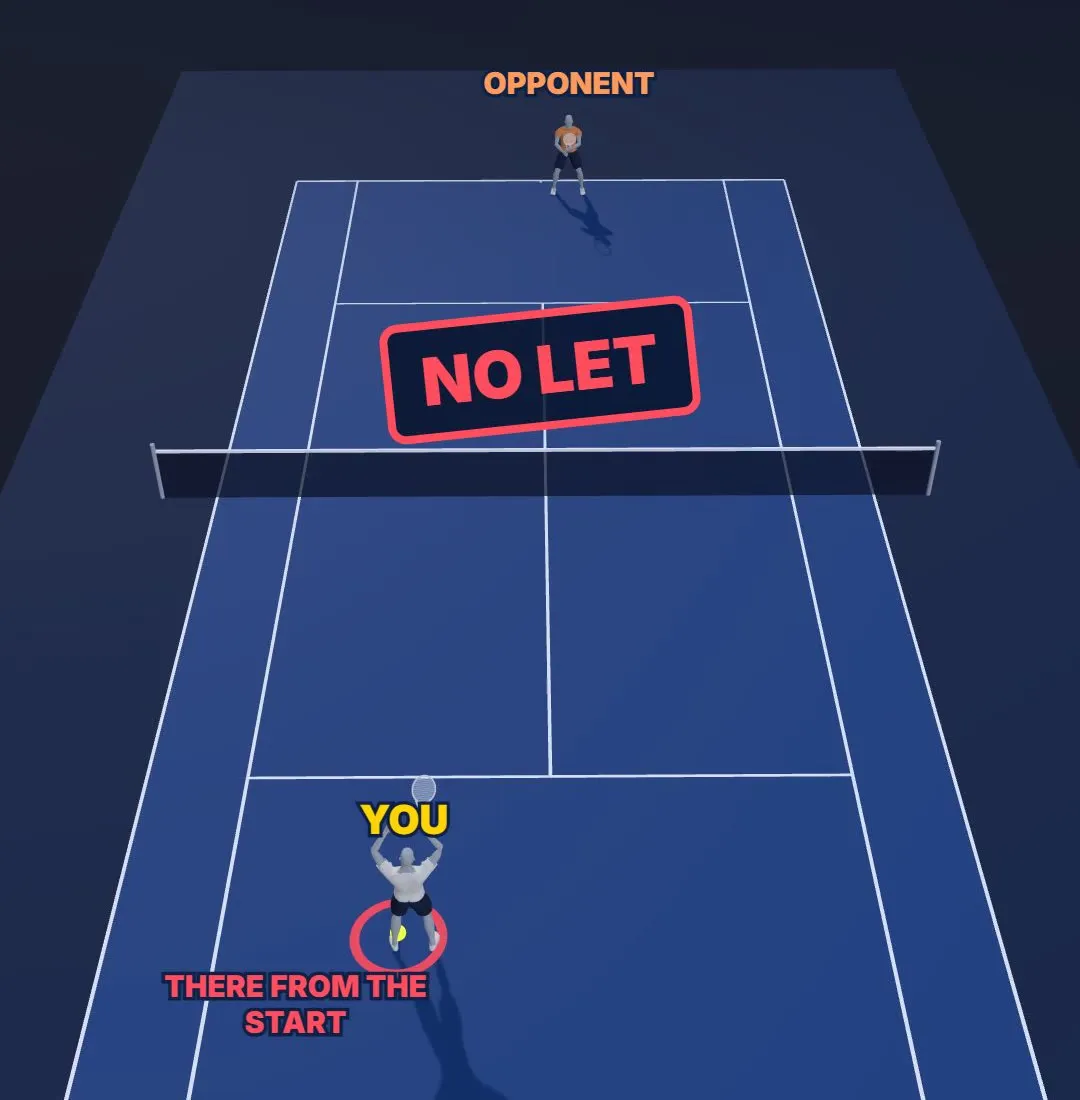
Figure 1. The ball was lying on your side before the first serve. That makes it your problem, not a hindrance.
You sprint wide for a forehand and your foot lands on a ball that has been lying on your side since before the point began. You stumble, miss, and shout “Let!”
Nothing gets replayed. Rule 26, Case 4 says a ball or object lying on your side when the point started is not a hindrance.1 The point stands as played, and you missed.
Why does a ball from next door get a replay, but this one doesn’t?
Rule 26 replays a point when you are hindered by something outside your own control. A ball that rolls onto your court mid-point is exactly that: the whole point is replayed, and a server who had already faulted gets a first serve again.1 The ball that was already on your side was never outside your control. The logic is simple: you could have cleared it before the first serve.
The USTA’s Code, the unwritten rules players follow when nobody is officiating, applies the same logic to your own things. A racket that flies out of your hand, a shoe that comes off, a trip over your own hat: none of them earns a let.2
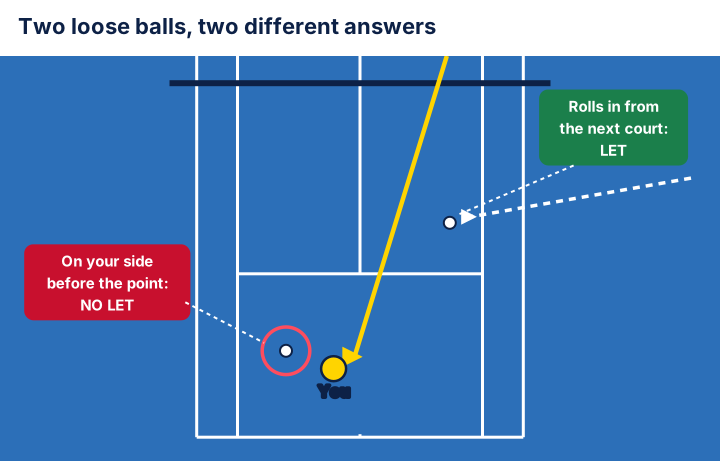
Figure 2. Same court, same point. The ball that was already there is no let; the ball that rolls in is a let. The yellow arrow is the shot in play.
So your own ball is your problem. What about a problem on the other side of the net?
What if it’s your opponent who stumbles?
Your opponent slips on a loose ball at their end, and you stop playing to be fair. You just lost the point.
Rule 26, Case 2: stopping because you think the opponent was hindered is not a hindrance, and the player who stopped loses the point.1 A player who claims a hindrance has to stop play as soon as possible.2 If they were really hindered, it’s theirs to call. Your job is to keep playing.
Three ways a stray ball costs you the point
- A let for your own clutter. An old ball near the baseline, a towel, a hat: if it was on your side before the point, it is not a hindrance.
- A let called late. When a ball from another court rolls in, call it as soon as you see it. Hit the shot, miss, and only then claim a let? Too late: you took your chance.2
- Stopping for them. If the other side was hindered, that call is theirs, not yours.
Try it this week: the three-second sweep
Before every first serve, look at your own end. Any ball, hat or towel on the court? Pocket it or move it behind the fence. The Code makes each player responsible for clearing their own end, and whenever the ball isn’t in play you can ask your opponent to clear a ball from the court or from beside the lines.2
References
-
International Tennis Federation, Rules of Tennis 2026, Rule 26 (Hindrance): Case 2 (a player who stops play because the opponent was thought to be hindered loses the point) and Case 4 (a ball or object lying on the player’s side when the point started is not a hindrance); Rule 23, Case 1 (another ball rolls onto the court: let, whole point replayed). https://www.itftennis.com/media/7221/2026-rules-of-tennis-english.pdf ↩ ↩2 ↩3
-
United States Tennis Association, Friend at Court 2026, Part 2 “The Code” (the players’ guide for matches without officials): items 17 and 18 (call a let promptly), 33 (a hindrance is claimed by stopping play at once), 36 (no let for things within your control, such as tripping over your own hat) and 42 (removing stray balls). https://www.usta.com/content/dam/usta/coach-organize/content-fragments/resource-library/assets/pdfs/friend-at-court.pdf ↩ ↩2 ↩3 ↩4