Practice & video · Video review
What did you really lose that match on?
Soccer coaches shown match footage recalled at most 40% of what mattered. Here is a three-pass way to watch your own match video and find what repeats.
After a loss you remember three or four points, and you have a story: it was my forehand. Is it?
Why not just trust your memory?
In one study, soccer coaches who had just watched match footage could not recall more than 40% of the important information. A video programme that pointed their eyes at key moments improved what they remembered around shots.1 That was coaches watching other teams, so read it as a warning, not a measurement of you.
Does watching video help?
In a golf study, 30 golfers practised with video-aided teaching, with spoken teaching, or alone. Straight after training the lone group scored best. Two weeks later both taught groups beat it, the video group by the most.2 The authors read this as video working, but slowly. A teacher guided the video there, and nobody has tested a tennis match tape this way, so what follows is our method, not a proven recipe.
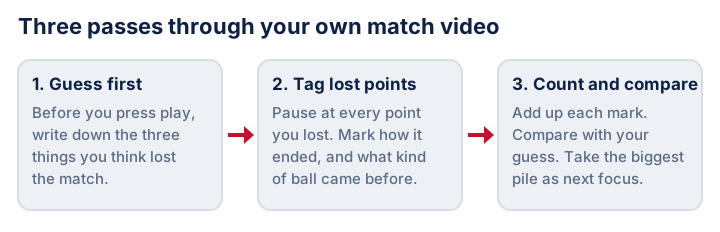
Figure 1. Our three passes. The guess comes first so the tape can prove you wrong.
What do you tag on a lost point?
Pause at every point you lost and mark how it ended. Then look at the ball before it. The TV statistician who coined “unforced error” listed what he checked: the pace of the previous shot, its depth and angle, how far the player had to run, and which way he was going.3 If you had time and space, it was yours. If not, it was a hard ball.
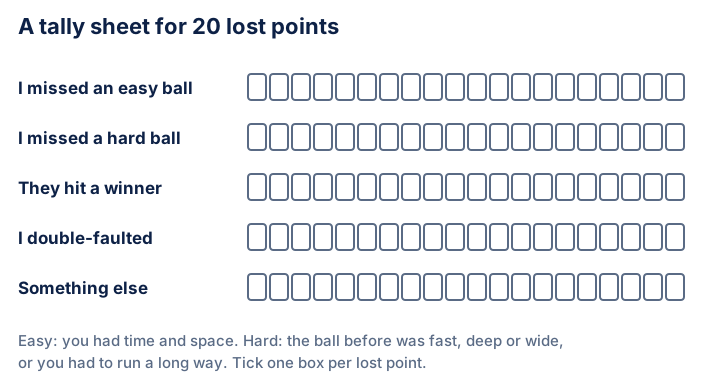
Figure 2. Twenty lost points is enough to see what repeats. That number is our suggestion, not a statistic.
Which pile do you fix?
Add up the marks and compare them with your guess. Take the biggest pile as next week’s one focus. If “hard ball” wins, the fix may be where you stand, not your stroke.
Four ways to learn nothing from the tape
- Watching it like a fan. In the soccer study, the group whose eyes were pointed at key moments is the one that improved. Give yours a job.
- Calling every miss your fault. Even the experts say forced and unforced is hard to judge, so use the four checks.
- Fixing everything at once. One pile, one change.
- Judging after one match. In the golf study the gain showed two weeks later.
Then check it worked
Change only the one thing from your biggest pile. Film your next match, tag 20 lost points again, and compare the piles.
References
-
Ian M. Franks and Gary Miller, “Training coaches to observe and remember,” Journal of Sports Sciences 9(3), 1991, pp. 285-297. Soccer coaches could not remember more than 40% of the pertinent information; a video programme with key-element orienting improved recall of events around shots. https://pubmed.ncbi.nlm.nih.gov/1960799/ ↩
-
M. Guadagnoli, W. Holcomb and M. Davis, “The efficacy of video feedback for learning the golf swing,” Journal of Sports Sciences 20(8), 2002, pp. 615-622. 30 golfers; video, verbal or self-guided practice; the video group did best on the 2-week delayed test. https://pubmed.ncbi.nlm.nih.gov/12190281/ ↩
-
Joel Drucker, “You’ve missed, but was it really an unforced error?,” Tennis.com, 19 December 2022. Quotes the statistician who coined the term on what to check (pace, depth and angle of the previous shot, distance run, direction) and the experts’ view that the label is hard to judge. https://www.tennis.com/news/articles/you-ve-missed-but-was-it-really-an-unforced-error ↩