Practice & video · Doubles drills
What should you drill for doubles? Three 2-on-2 situations
LTA splits doubles practice into starting, playing and ending the point. Here is one 2-on-2 drill for each, with a score you can count.
Four players, one court. Most nights it goes: warm up, then play points. LTA’s 2023 coach-forum slides sort doubles drills into three parts instead: start the point, in the point and end the point.1 Here is one 2-on-2 drill for each. The rules are ours. The numbers and one-line tips are LTA’s.
Drill 1: how do you start the point?
The slides stress attacking the second serve. Pro returners aim to win 55% of second-serve return points but only 33% of first-serve ones, and the one-line tip is “block”.1
The serving team serves second serves only. The returner answers with a short, blocked swing, and the returner’s partner waits at the net. Play the point out: 10 serves, then swap. Count the points the returners win. The 55% is a pro target, not yours. Compare week to week.
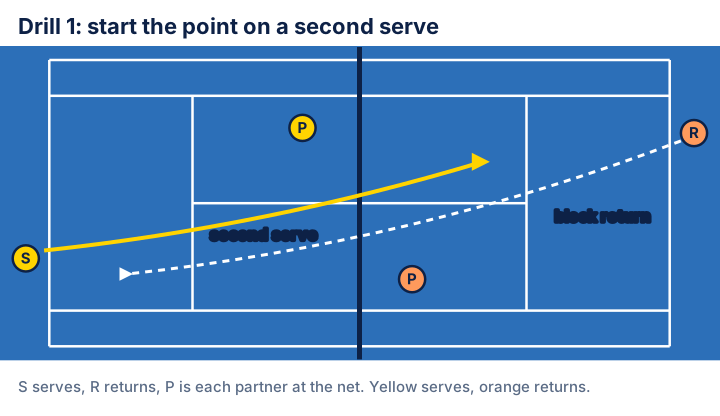
Figure 1. Second serve in, blocked return back. Count the returners’ points.
Drill 2: what happens in the point?
At pro level 55% of the men and 90% of the women in the top 100 stay back after serving, so the slides say the crosscourt battle will come up more often: don’t force players to the net.1 LTA’s doubles article adds that closing the net down while your partner is in a crosscourt battle makes you harder to pass.2
The two baseliners rally crosscourt only. The net players start in the middle of the service box, the neutral spot in that article, and move with every ball. A net player may poach after the third crosscourt ball. A winning poach scores 2, any other point 1. First to 11, then swap.
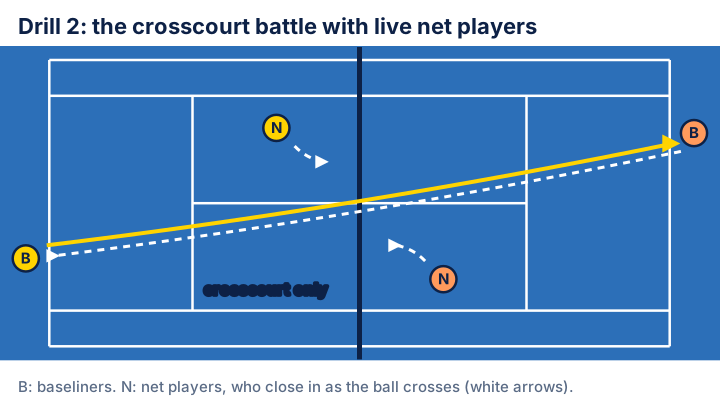
Figure 2. Baseliners stay crosscourt. Net players stay alive.
Drill 3: how do you end it?
The slides’ picture for the net: when both of you are there, make a wall and slide it side to side like windscreen wipers. At pro level, teams at the wall win 60% of points. The tip for this phase is “cross the service line”.1
One pair starts side by side on the service line and crosses it with the first ball. The other pair stays on the baseline and wins a point with a lob or a pass. The wall wins it with a volley that lands in. First to 7, then swap.
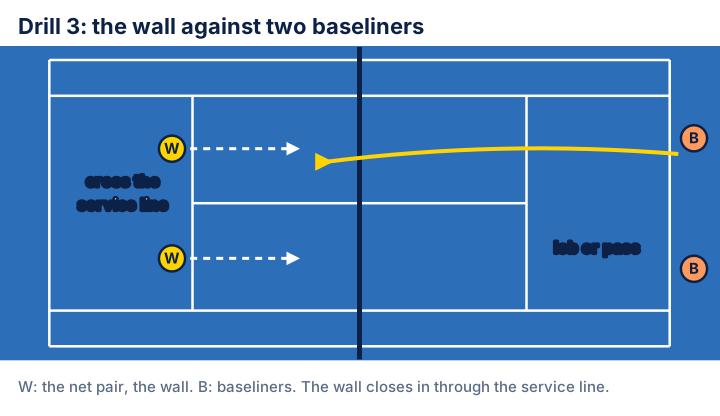
Figure 3. The pair closes in through the service line and moves as one. The baseliners need a lob or a pass.
Three ways a good drill turns bad
- Forcing everyone to the net. The slides say the crosscourt battle comes first.
- Net players who watch. LTA says all four players must stay active.2
- Only practising first serves. The slides call attacking the second serve a key point.
Try it this week
Run all three in 30 minutes, ten each, and write one score per drill: second-serve returns won out of 10, poaches won, wall points held. Next week, try to beat your lowest.
References
-
LTA, “LTA Coach Forum 2023: Doubles” (coach-education slides), the British Tennis doubles system. Three parts (start the point, in the point, end the point); pro-level figures (55% and 33% second- and first-serve return points, 55% and 90% staying back, 60% at the wall); tips “block” and “cross the service line”; the crosscourt battle and the wall. https://www.lta.org.uk/4a890f/siteassets/coach-hub/resources/off-court/pdf/coach-forums-2023---doubles.pdf ↩ ↩2 ↩3 ↩4
-
LTA, “Essential doubles tactics and hand signals” (LTA coach Matt Smith). Net player in the middle of the service box when neutral; closing the net down during a crosscourt battle; all four players active. https://www.lta.org.uk/play/tennis-tips-and-techniques/essential-doubles-tactics-and-hand-signals/ ↩ ↩2