Mental · Nerves and breathing
Heart racing on a big point: calm down or get excited?
Nine in ten say 'calm down' is the best advice for nerves. In lab tests, 'I am excited' beat 'I am calm'. Here is the swap, and the breath that goes with it.
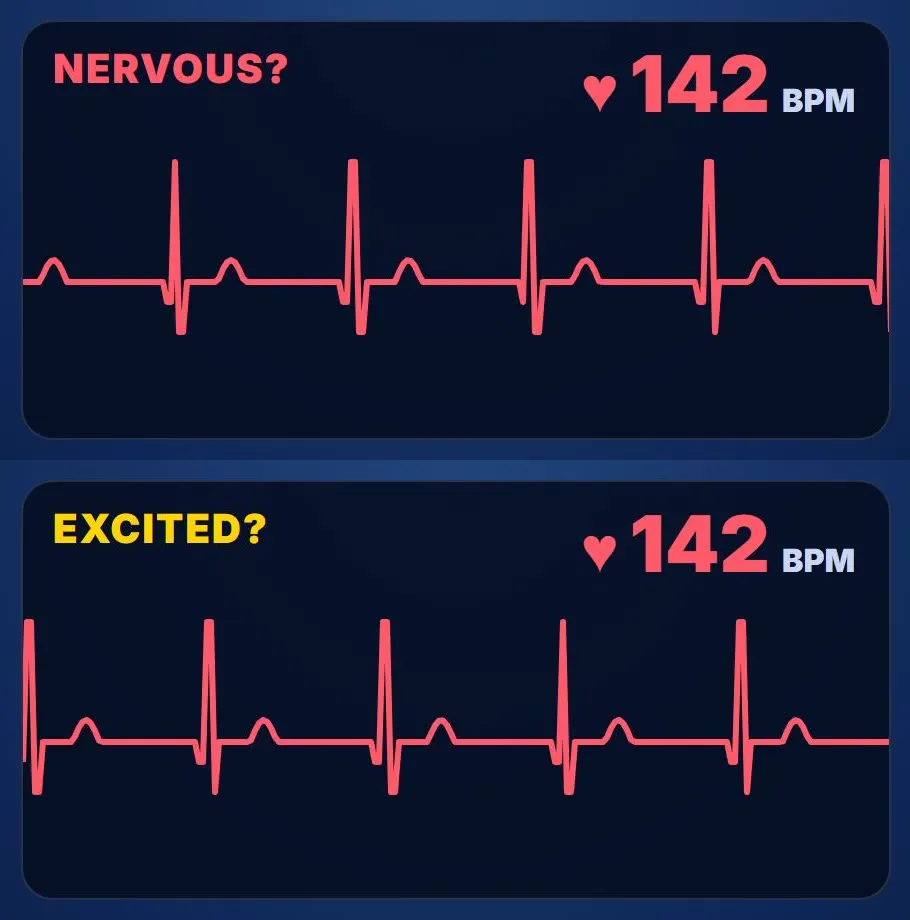
Figure 1. The same fast heartbeat can carry either name. The monitor is an illustration from our lesson video, not a measurement.
Why doesn’t “calm down” work?
You’re serving at 4-5, 30-40. Your heart is hammering and your hands feel light. You know what to tell yourself: calm down.
So does almost everyone. In an online survey, US adults who pictured themselves extremely anxious before a big speech picked “try to relax and calm down” as the best advice about 91% of the time. “Try to be excited” got about 8%.1
But the body doesn’t take that order. In a maths experiment, people told to “try to remain calm” ended with no lower heart rate than anyone else.1 Nerves and excitement are close cousins: both come before something important, and both bring high arousal, the fast heart and quick breath. “Calm” asks your body to switch off. “Excited” only asks you to rename what it is already doing.
Does a new name change anything?
What happened when people said “excited”?
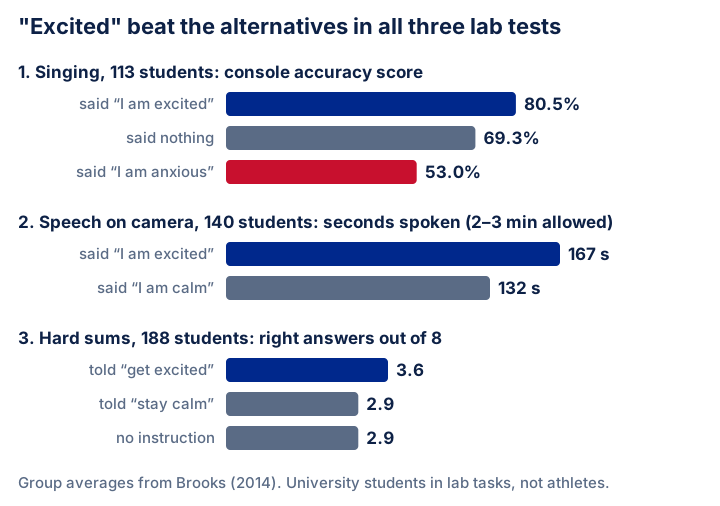
Figure 2. Three lab tests from one paper. Excited came first every time.
In the singing test, 113 university students said one line before singing a rock song on a karaoke console. Those who said “I am excited” scored 80.5% on the console’s accuracy score, against 69.3% for those who said nothing and 53.0% for “I am anxious.” In the other two tests, “excited” beat “calm” head to head. Speakers who said “I am excited” talked longer and were rated more persuasive and confident by judges who didn’t know their condition. Students told to “get excited” got more of eight hard sums right under time pressure.1
The catch: these were students singing, speaking and doing sums, not athletes in a tiebreak. A 2017 review of 47 choking studies with athletes reported no effect for “reappraisal cues.”2 Treat “I’m excited” as a promising word, not a guarantee.
So what do you pair it with, between points?
What goes with the word?
A long breath out. In a four-week trial, 108 adults practised 5 minutes a day of “cyclic sighing”: two breaths in through the nose, then one long breath out through the mouth. Their mood rose more than with mindfulness meditation (+1.89 against +1.22 points a day on a 10-50 scale) and their breathing rate fell more. Anxiety fell about equally in both, and resting heart rate, measured in sleep, didn’t change.3 That trial wasn’t about athletes or a single breath mid-match; using one or two between points is our extension.
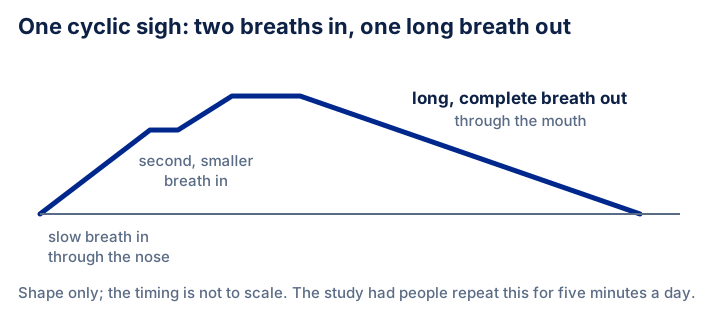
Figure 3. The cyclic sigh as the study described it. Between points you would do it once or twice.
Between points, then: turn away from the net, breathe out long, say “I’m excited,” and pick your target.
Three ways to botch the swap
- Saying it like a joke. The singers were asked to try to believe their line. Say it as a plan.
- Waiting for your pulse to drop first. In the studies it didn’t. The word comes first and the pulse can stay high.
- Treating it as a spell. The evidence is from lab tasks, so keep the breath and a clear target too.
Try it this week: find your big-point word
- Start with the tested words, “I’m excited.” If they feel fake, try “I’m ready” (untested) and judge it by your next serve.
- In your next practice set, run the four steps after every lost point.
- Afterwards, write down the word you used and how the next serve felt.
References
-
Alison Wood Brooks, “Get Excited: Reappraising Pre-Performance Anxiety as Excitement,” Journal of Experimental Psychology: General 143(3):1144-1158, 2014. An online survey (91% chose “calm down”) and lab experiments with university students: singing (N = 113), speech (N = 140), sums (N = 188). https://doi.org/10.1037/a0035325 ↩ ↩2 ↩3
-
Peter Gröpel and Christopher Mesagno, “Choking interventions in sports: A systematic review,” International Review of Sport and Exercise Psychology 12(1):176-201 (online 2017). 47 studies with athletes; null effects reported for reappraisal cues. https://doi.org/10.1080/1750984X.2017.1408134 ↩
-
Melis Yilmaz Balban and colleagues, “Brief structured respiration practices enhance mood and reduce physiological arousal,” Cell Reports Medicine 4(1):100895, 2023. 108 adults, 5 minutes a day for 28 days; cyclic sighing against mindfulness meditation. https://pmc.ncbi.nlm.nih.gov/articles/PMC9873947/ ↩