Forehand · Running around
A ball comes to your backhand. Run around it?
Run around every backhand and you never fix it. One kind of ball is worth the run, and where you wait afterwards matters just as much.
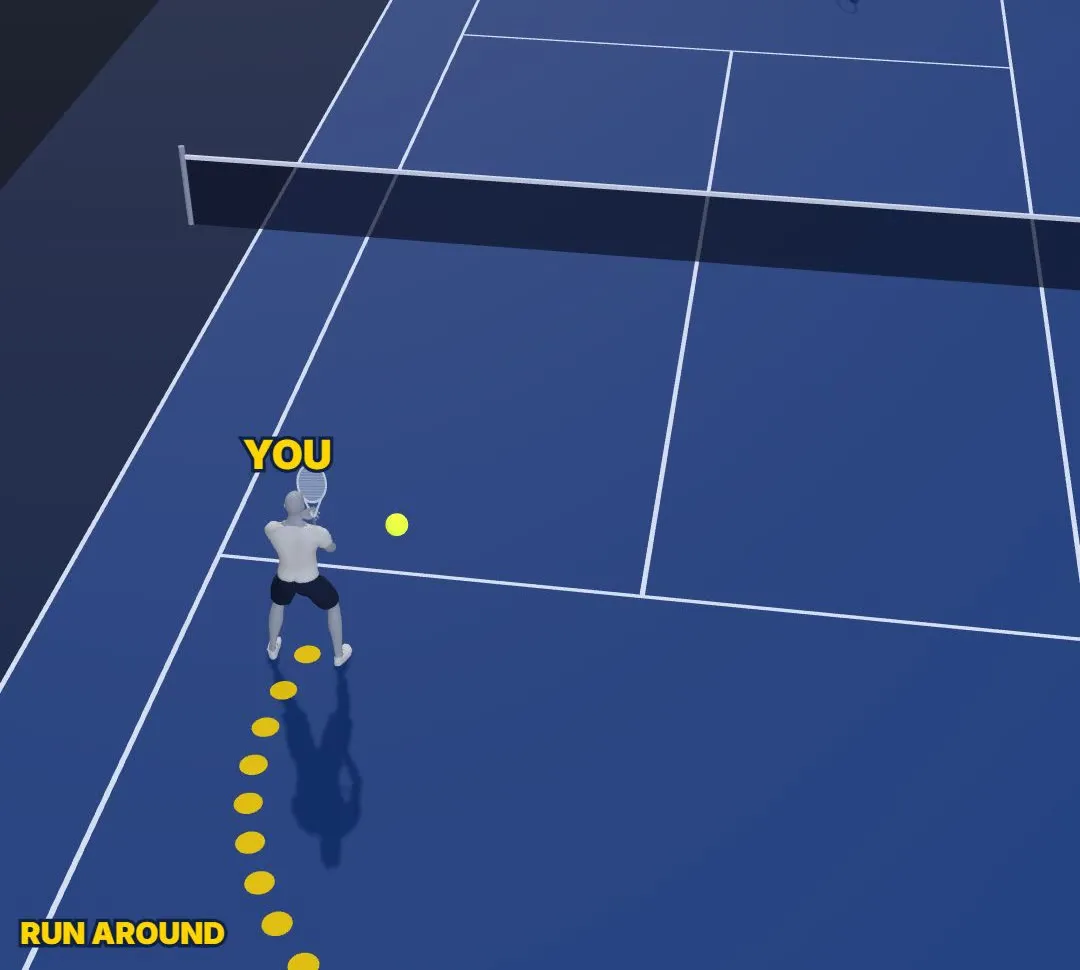
Figure 1. The run-around: step out to your backhand side so the ball arrives on your forehand.
Which ball is worth the run?
A cross-court ball is heading for your backhand. Your forehand is the better shot, so your feet already want to slide left. One catch: run around every backhand and the backhand never gets better. The authors of Tennis Skills & Drills say the habit takes real speed and locks you into one style.1
So when is it worth it? Their condition: a short, midcourt ball with less pace and more height.1 A second coaching article says it in plainer words: save it for a weak, floating ball.2 Our reading: short, slow and high all give you time for the extra steps.
A deep, fast ball is the opposite. You can’t get around it in time, so take it on the backhand. (That half is our rule of thumb; the book states only the first condition.)
Say it is the right ball. Where does the forehand go?
Where does the inside-out forehand land?
An inside-out forehand starts on your backhand side and crosses to the other half of the court. Against a right-hander, that is their backhand. The book calls it the answer to a weak backhand, and its drill aims at the spot halfway between the middle of the baseline and the alley.1
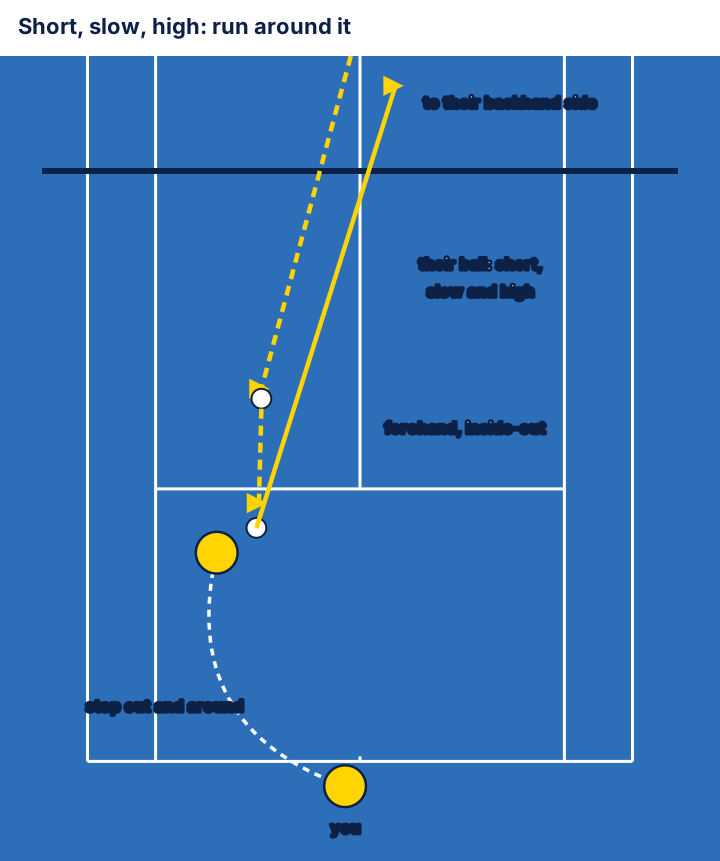
Figure 2. A short, slow, high ball gives you time to loop around it. Our drawing on an ITF-sized court.
Good shot. But you are now far to the left of where you started. Where do you go next?
Why not go back to the middle?
Because the book says to wait on your weaker side, about halfway between the centre mark and the sideline. That leaves more room on your forehand side and makes the court on your backhand side small.1 On our drawing it is 2.1 m of court on your backhand side and 6.2 m on your forehand side.3
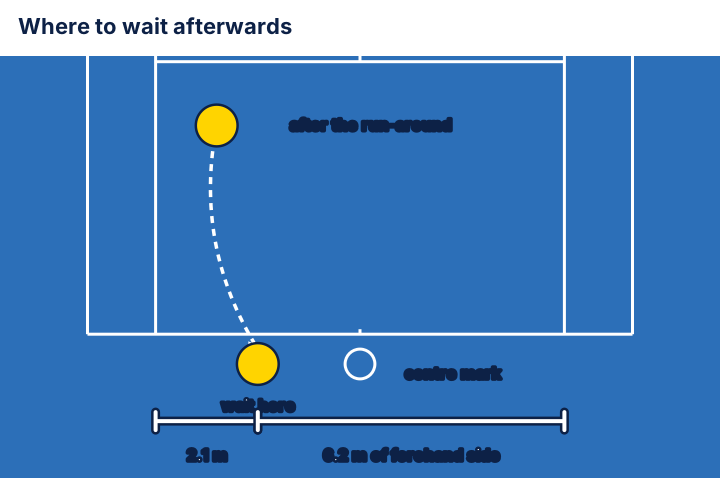
Figure 3. The big gap is on your strong side, on purpose. It is bait, so be quick.
That gap is bait: they hit into it and you get a forehand. But a slow recovery turns bait into a hole, because it leaves a big gap along the forehand sideline for the opponent to use.2
Four ways the run-around costs you
- Circling every backhand. It never fixes the backhand.1
- Circling a deep, fast ball. You arrive late. Take the backhand.
- Recovering to the centre mark. The spot is halfway to your backhand sideline.
- Recovering slowly. You have to be quick to get back into position.2
Try it this week: the three-quarter court game
Adapted from the book’s drill.1 Two players, baseline to baseline.
- Start mid-baseline. One player feeds a ball that lands halfway between the middle and the sideline on the other’s backhand side.
- The receiver runs around it and hits inside-out to the same spot on the other side. The feeder does the same back.
- After two inside-out forehands each, play the point out on the whole court.
- First to 7 wins the round. Play best of five.
How we got the numbers
The figures are our drawings on an ITF-sized court, whose singles court is 8.23 m wide.3 Halfway between the centre mark and the sideline is 2.06 m from the centre, which leaves 2.06 m to your backhand sideline and 6.17 m to the forehand one. All for right-handers. The ball paths and the 3D picture come from our lesson animation: illustrations, not measurements.
References
-
Joey Rive and Scott C. Williams, Tennis Skills & Drills, Human Kinetics, publisher’s excerpt “Strategies give players a competitive edge.” Run-around conditions (a short, midcourt ball with slower pace and more height), the inside-out forehand, recovering to the weaker side (three-quarter court) and the three-quarter court drill. https://us.humankinetics.com/blogs/excerpt/strategies-give-players-a-competitive-edge ↩ ↩2 ↩3 ↩4 ↩5 ↩6
-
Tennis.com, “Tip: When to Run Around Your Backhand,” 25 October 2010 (no byline). Save the run-around for a weak, floating ball, and get back into position quickly afterwards. https://www.tennis.com/news/articles/tip-when-to-run-around-your-backhand ↩ ↩2 ↩3
-
International Tennis Federation, Rules of Tennis 2026, Rule 1 (The Court): the singles court is 8.23 m wide. https://www.itftennis.com/media/7221/2026-rules-of-tennis-english.pdf ↩ ↩2