Footwork · Recovery
You recovered to the middle. Why did they hit past you?
The centre mark is the middle of your baseline, not the middle of where they can hit. From their sideline the two spots are about a metre apart.
You hit a crosscourt, they hit back from their sideline, and you jogged to the centre mark. The next ball went to the side you had left open. You did recover. So why were you in the wrong place?
Is the centre mark the middle of anything?
Only of your baseline. The middle you need is the middle of where your opponent can hit. One coach calls it “center theory”: after every shot, stand in the centre of their widest possible replies. He says players often scramble back to the centre of the baseline when that is not the centre of those replies, and then get hit behind.1 LTA’s coach says to recover to the middle area of the court, pushing off your outside leg to get there sooner.2
Where is that middle, in metres?
We worked it out. Put the opponent on their singles sideline. Their replies can land anywhere in your singles court from the service line back. The line that splits the angle between their two widest replies crosses your baseline 1.0 m from the centre mark, on the side across from them.
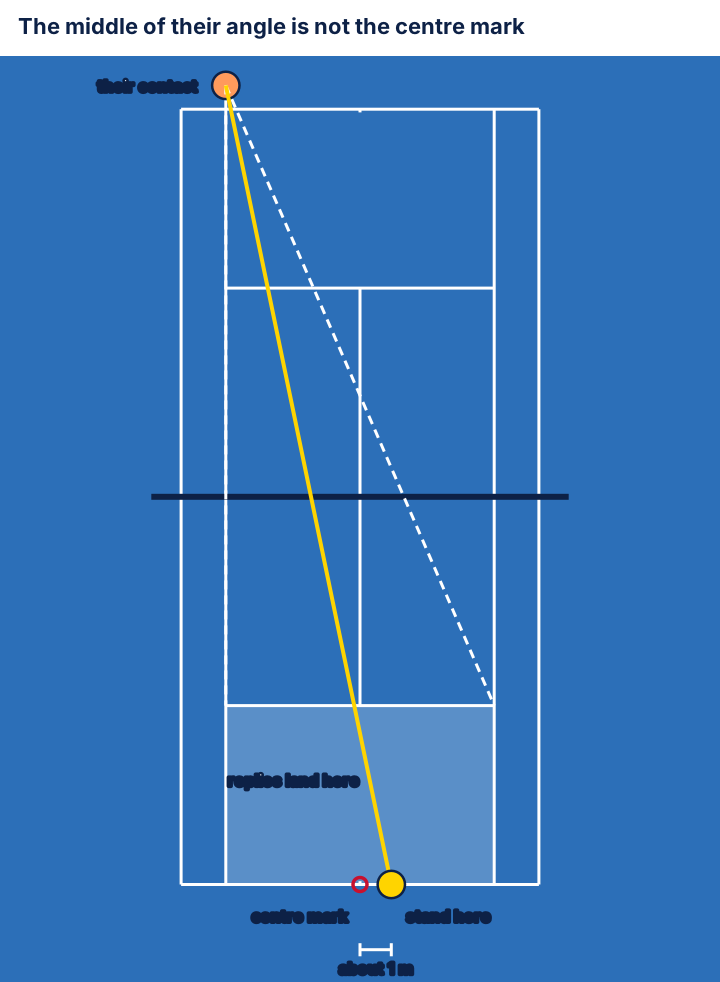
Figure 1. They hit from their sideline. You stand about a metre across from them, not on the centre mark.
If they step in about 4 m to hit, the gap grows to 1.2 m. A doubles column says the same in words: when the hitter closes in, shift a little farther out to the side.3 If they stand in the middle, the centre mark is exactly right.
So how far across should you go?
How sharp can their angle be?
That depends on what you let them hit. If their replies can only be deep balls into your two corners, the middle is within 0.1 m of the centre mark. Down to your service line, it is 1.0 m. All the way to the net, 3.2 m.
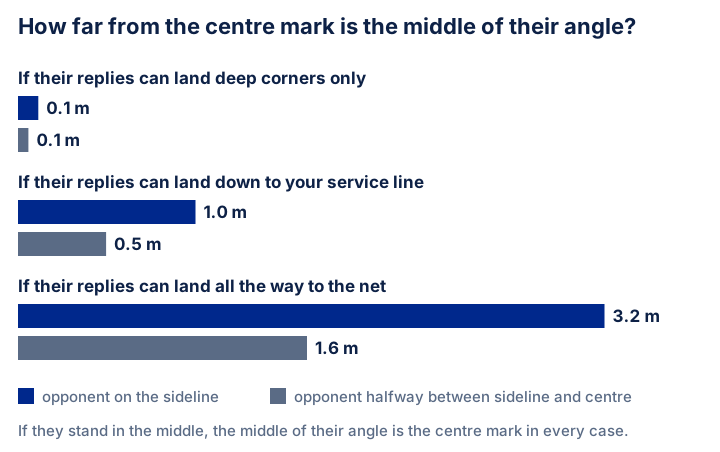
Figure 2. The sharper the angles they can reach, the farther across you stand.
The center-theory shortcut, to stand on your court where they stand on theirs (their ad side, your ad side), is close to the widest case here. Our 1.0 m is the cautious one. Read it as a direction and a size, not a decimal.
Three ways to recover to the wrong place
- Running to the centre mark on autopilot. It is the middle of your baseline, not of their angle.
- Skipping the push. Push back off your outside leg as you finish the shot.2
- Not going wide enough after a sharp crosscourt. The same column calls this the most common positioning error: the return is then easy.3
Try it this week: the cone drill
- Put a cone 1 m either side of the centre mark on your baseline.
- Your partner hits crosscourt from one sideline, then the other, in random order.
- After each shot, push off your outside leg and recover to the cone across from them.
- Your partner checks where your feet are as they hit. Swap after 10 balls.
How we got the numbers
Court sizes are from the ITF rules.4 We put the opponent on a singles sideline, 0.73 m behind their baseline, and let their replies land anywhere in your singles court from the service line to the baseline. The spot is where the line that splits the angle between their two widest replies crosses your baseline. This is our geometry, not a measurement from matches.
References
-
Ron Waite, “Euclidean Tennis: A Geometry of the Game,” Turbo Tennis, Tennis Server, May 1998. The “center theory”: recover to the centre of the opponent’s widest possible replies, and the same-side shortcut. https://www.tennisserver.com/turbo/turbo_98_5.html ↩
-
LTA, “Improve your tennis footwork on court with these simple tips” (LTA coach Matt Smith). Push back to a recovery position in the middle area of the court, using the outside leg. https://www.lta.org.uk/play/tennis-tips-and-techniques/improve-your-tennis-footwork-on-court-with-these-simple-tips/ ↩ ↩2
-
Kathy Krajco, “The Doubles Angle of Return,” Wild Cards, Tennis Server, February 2004. A doubles column: shift farther out to the side when the hitter closes in; failing to cover a sharp crosscourt angle is the most common positioning error. https://tennisserver.com/wildcards/wildcards_04_02.html ↩ ↩2
-
International Tennis Federation, Rules of Tennis 2026, Rule 1 (The Court): 23.77 m long, singles court 8.23 m wide, service lines 6.40 m from the net. https://www.itftennis.com/media/7221/2026-rules-of-tennis-english.pdf ↩