Doubles · Serving team
Why do doubles players keep serving down the T?
From the T, a return up the sideline needs a sharp 12° angle. From a wide serve it is almost straight. That is what lets your partner poach.
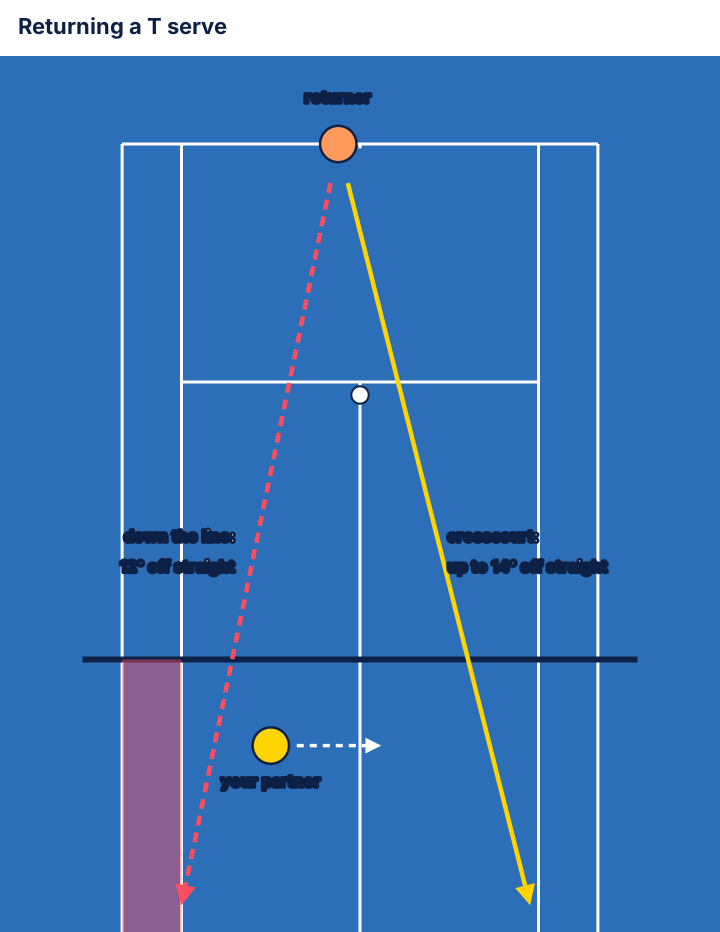
Figure 1. Returning a T serve. White ball: where the serve lands. Red dashed: the return up the sideline. Yellow: the widest crosscourt. Our geometry.
What does the returner lose on a T serve?
Your partner is at the net and you’re about to serve. Down the T, or wide? A tennis.com coaching tip calls the T often the most effective option in doubles.1 Tennis Life gives the reason: serve down the T and the returner does not have the angles to hit down the line.2
Put numbers on that. A returner who meets the ball near the middle has to hit 12° off straight to reach the alley behind your partner. The widest crosscourt return is 14° off straight. That is a narrow fan.
Why does that matter to your partner? A poach only pays if getting it wrong is cheap. With the down-the-line option gone, Tennis Life says the server’s partner can expect to move toward the middle to volley the return.2 Tennis.com adds that serving to the middle sends the ball where the poacher is heading and makes a return up the sideline behind them tougher.1
So what changes when you go wide?
What does a wide serve give back?
Everything the T took away. Pulled to the sideline, the returner has an almost straight ball down the line, 1° off straight in our geometry, and a crosscourt angle of up to 24° (Figure 2). Tennis.com’s tip puts it the same way: wide serves open more crosscourt angles and chances up the alley, so use them sparingly.1
That fits LTA coach Louis Cayer’s advice for a wide serve: hold a central spot without crossing over.3 A poacher would be leaving the alley to a ball that is already nearly straight.
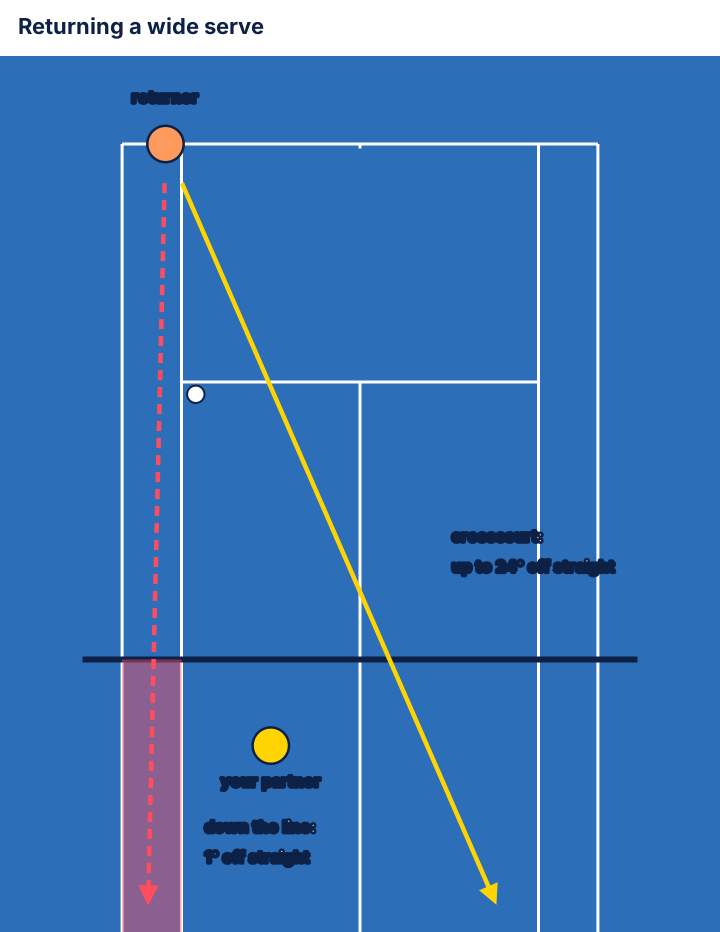
Figure 2. Returning a wide serve. The line ball is almost straight, so a poacher is punished.
Three ways the T serve gets punished
- Never going wide. The same tip says a wide serve can pay off, especially a tricky one or one aimed at the returner’s weaker side.1 Use it sparingly, not never.
- Poaching on a wide serve. Our geometry says the ball behind you is almost straight. Stay central, as Cayer advises.3
- Moving too soon on the T. If you go early, the returner can recognise it and hit behind you.1
Try it this week: ten T’s
- Serve ten first serves down the T with your partner ready to poach.
- Tally where each return goes: crosscourt, down the line, or error.
- Then serve five wide with your partner holding. Compare the tallies.
How we got the numbers
The angles are our own geometry on an ITF-sized court.4 The returner meets a T serve 0.5 m from the centre line and a wide serve 1.0 m inside the doubles sideline, both on the baseline. Return targets are 0.5 m inside the doubles sidelines and 2 m inside the near baseline, and angles are measured from a line parallel to the sidelines. Real contacts vary; treat the numbers as a guide.
References
-
Jon Levey, “Quick Tip: Poaching creates doubles trouble,” Tennis.com, 2 August 2025. Serving down the T is often the most effective option and sends the ball where the poacher is heading; wide serves open more crosscourt angles and chances up the alley, so use them sparingly; moving too soon lets the returner recognise it. https://www.tennis.com/baseline/articles/quick-coaching-strategy-tip-poaching-creates-doubles-trouble ↩ ↩2 ↩3 ↩4 ↩5
-
Tennis Life (Maria, Team Editor), “Doubles Strategies to Hold Serve in Tennis,” Poaching section: when serving down the T the returner does not have the angles to hit down the line, so the server’s partner can move toward the middle to volley the return. https://tennislifemag.com/doubles-strategies-hold-serve/ ↩ ↩2
-
LTA, “How to improve your doubles skills: your questions answered by expert LTA coach Louis Cayer.” Poaching positions: on a wide serve, hold a central spot without crossing over. https://lta.org.uk/advantage-home/content/how-to-improve-your-doubles-skills-your-questions-answered-by-expert-lta-coach-louis-cayer ↩ ↩2
-
International Tennis Federation, Rules of Tennis 2026, Rule 1 (The Court): doubles court 10.97 m wide, 23.77 m long, service lines 6.40 m from the net. https://www.itftennis.com/media/7221/2026-rules-of-tennis-english.pdf ↩