Doubles · Net player
Three spots at the net. Which one is yours right now?
The LTA says a net player must never just watch. It gives you three spots to stand in, and the state of the point decides which one.
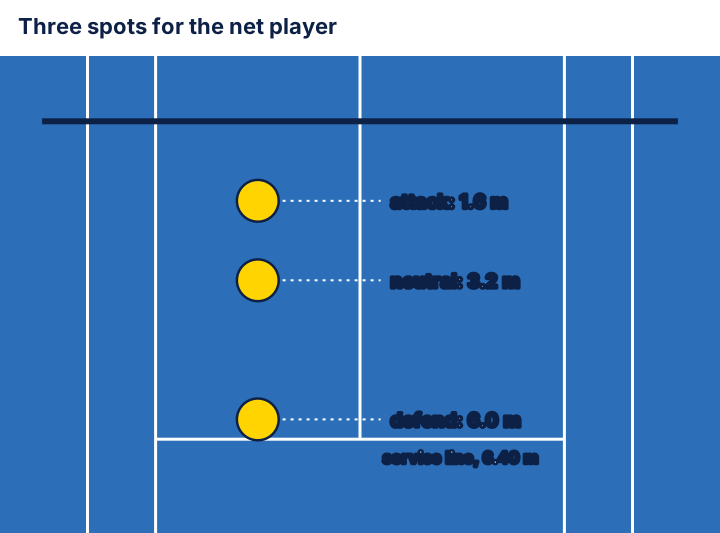
Figure 1. The LTA’s three spots, drawn in the left service box. The distances are our drawing.
Why not just pick a spot and stay there?
Your partner is serving. You’ve picked a spot at the net and you’re staying put. The LTA says that’s the mistake: all four players have to stay active, and you don’t want to be caught out watching at the net.1
It gives the net player three places to stand, depending on the point. Attacking: push further into the net. Neutral: the middle of the service box. Defending: closer to the service line.1
The service box is 6.40 m deep,2 so the middle is 3.2 m from the net. In our drawing the other two spots are 1.6 m and 6 m.
So how do you know which point you’re in?
How do you read the point?
Our rule of thumb, not the LTA’s. Attack when your side has them under pressure: your partner just hit a deep ball and they’re scrambling. Defend when your side is under pressure: they’ve pulled your partner wide. Neutral when it’s neither.
The LTA’s coach-forum slides add a twist: in doubles, each player has their own game situation.3 So read your situation, not just your partner’s.
What does standing in the wrong spot actually cost you?
What does each spot cost you?
Lobs. LTA coach Louis Cayer says that close to the net, lobs come often, even for pros. From the middle of the box, he adds, you only need to cross the service line behind you to catch one.4
Measure that in our drawing (Figure 2): 3.2 m of running from the neutral spot, 4.8 m from the attack spot, 0.4 m from the defend spot. Standing close creates pressure, since the coach-forum slides tell net players to squeeze the net,3 and it costs you lob distance. Standing back does the opposite.
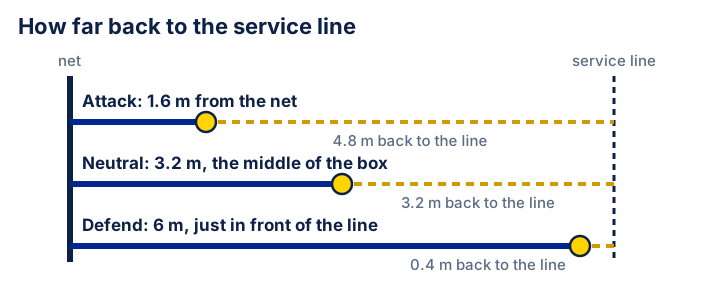
Figure 2. Distance back to the service line from each spot (our drawing).
Three ways to stand in the wrong spot
- Freezing. One spot for the whole match. The LTA wants net players constantly on the move with the state of the point.1
- Staying up when your team is under pressure. Defending means standing closer to the service line.1
- Backing off when you’re attacking. Attacking means pushing further into the net.1
Try it this week: call the spot
Rally with two players at the net and two at the baseline.
- After every shot, the net player says “attack”, “neutral” or “defend” out loud and steps to that spot.
- Your partner at the baseline says if they see it differently.
- Play 10 points, then swap.
References
-
LTA, “Essential doubles tactics and hand signals” (coach Matt Smith), ‘Positioning and movement at the net’: four roles, all active; if attacking push further into the net, if neutral stand in the middle of the service box, if defending stand closer to the service line. https://www.lta.org.uk/play/tennis-tips-and-techniques/essential-doubles-tactics-and-hand-signals/ ↩ ↩2 ↩3 ↩4 ↩5
-
International Tennis Federation, Rules of Tennis 2026, Rule 1 (The Court): the service line is 6.40 m from the net. https://www.itftennis.com/media/7221/2026-rules-of-tennis-english.pdf ↩
-
LTA, “Coach Forums 2023: Doubles,” slide 9, “Doubles positions”: each player has their own game situation; ‘neutral’ is used in doubles instead of ‘rally’. Slide 14, “Fears to overcome”: squeeze the net and create pressure for the opponents. https://www.lta.org.uk/4a890f/siteassets/coach-hub/resources/off-court/pdf/coach-forums-2023---doubles.pdf ↩ ↩2
-
LTA, “How to improve your doubles skills: your questions answered by expert LTA coach Louis Cayer.” On the fear of being lobbed: lobs come often near the net, even for pros; from the middle of the service box you only need to cross the service line behind you. https://lta.org.uk/advantage-home/content/how-to-improve-your-doubles-skills-your-questions-answered-by-expert-lta-coach-louis-cayer ↩