Doubles · Net player
Poach, or just fake it? A bluff the returner must read
You don't have to touch the ball to put pressure on it. The LTA lists the fake cross-over as a way to make returners take risks. Here is how to use it safely.
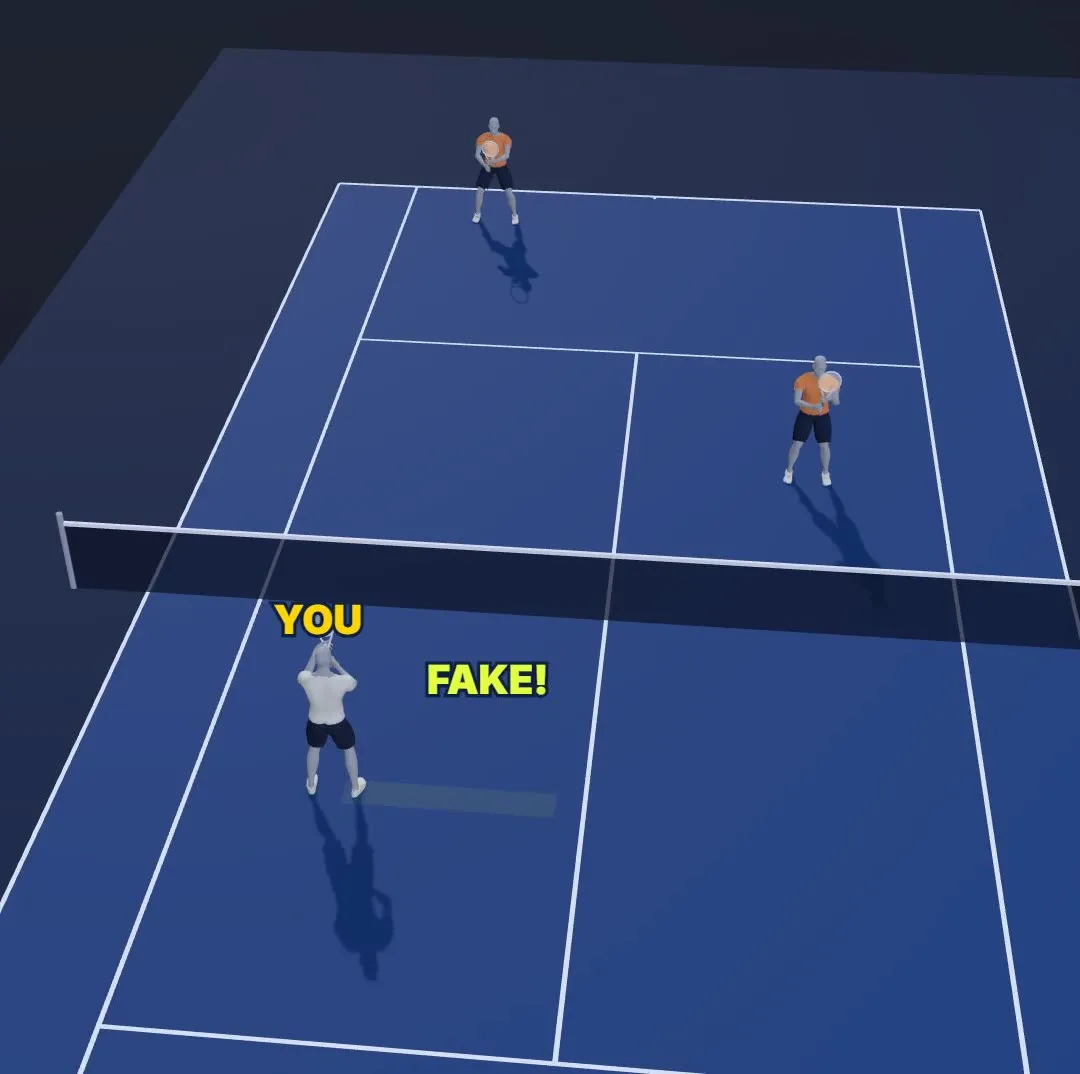
Figure 1. The fake: lean toward the middle as if you were crossing, then slide back home.
What does the returner see?
Your partner is stuck in a crosscourt rally and you’re at the net with nothing to hit. Do something anyway. Lean toward the middle as if you were about to cross, then step back home.
The LTA lists exactly that, pretending to cross over, as one of two plays that can make opponents take risks and make errors.1 The other is closing the net down while your partner rallies crosscourt, so you’re harder to pass.
The returner sees a net player leaving the alley, and an alley that suddenly looks wide open (Figure 2). The tempting reply is down the line. It’s also a hard shot: LTA coach Louis Cayer’s yardstick is that anyone who made two of five passing shots would be the best in Britain.2
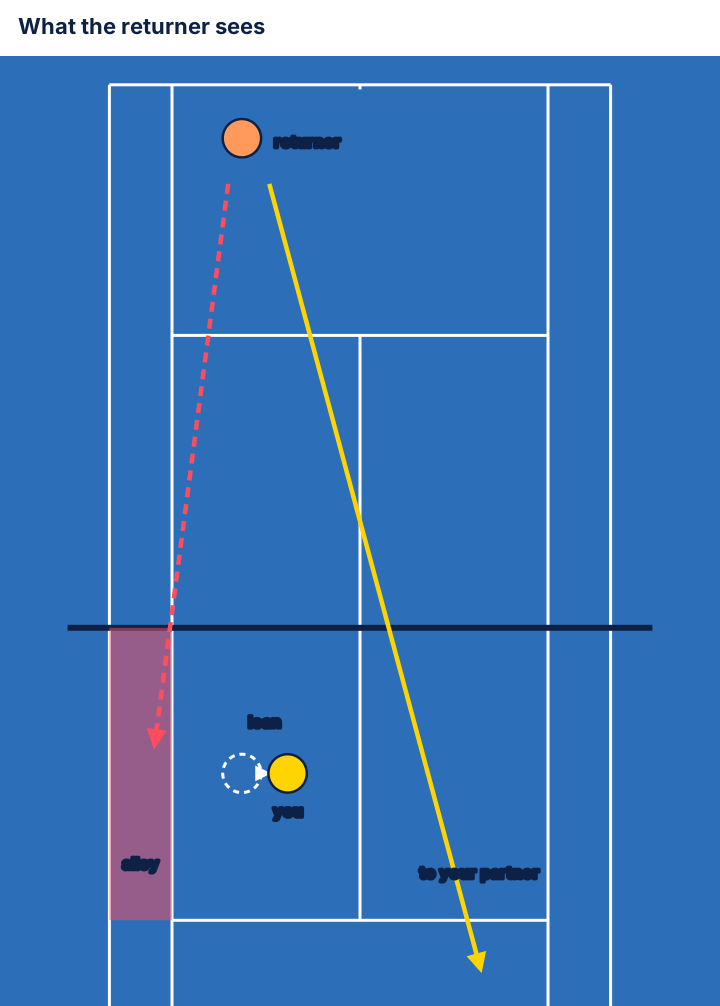
Figure 2. Red dashed: the tempting shot into the open alley. Yellow: the safe crosscourt reply.
So how do you fake it without getting passed for real?
How do you fake it and stay safe?
Start with your partner. If you cross for real and the return goes down the line, the server has to be ready to cover it, which is why Cayer says pros agree their poaches beforehand.3
Then use a signal. The LTA’s second pre-serve signal says where the server’s partner goes after the point: an open hand means come across and intercept the return, a clenched fist means stay.1
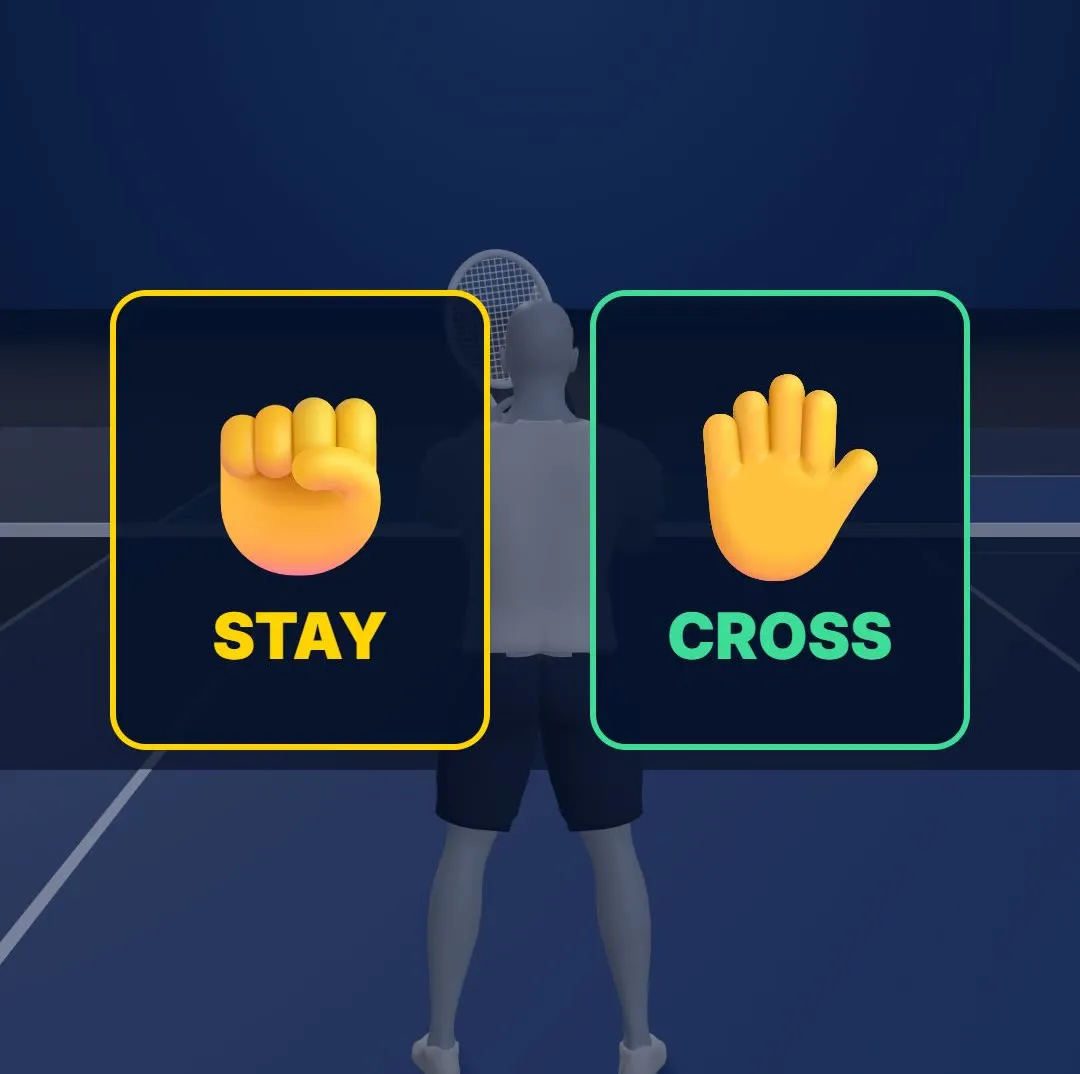
Figure 3. Fist: stay. Open hand: cross.
Last, mind the timing. A tennis.com coaching tip warns that if you move too soon, the returner can recognise it and hit down the line. If they do see you move and start second-guessing their target, “all the better”.4 So keep the fake small enough to get back from.
Is it even allowed? Yes. The USTA’s Code says a player may feint with the body while a ball is in play. Waving your arms or racket, or stamping your feet, solely to distract is not allowed.5
Three ways a fake backfires
- Faking without telling your partner. If the fake turns into a half-poach, the alley is open and nobody is covering it.
- Faking big. If you can’t get back to the alley before the ball arrives, it isn’t a fake any more.
- Faking every point. The LTA’s third tactic is to change it up: the more the returner questions what you’ll do, the more reactive they have to be.1 Mix fakes, stays and real poaches.
Try it this week: fist or open hand?
- Before the match, agree two signals with your partner: fist = stay, open hand = cross.
- For one set, fake on the first point of every game and show a fist.
- Keep a tally of the returner’s replies: errors, down-the-line winners, safe crosscourts. If it isn’t paying, stop.
References
-
LTA, “Essential doubles tactics and hand signals” (coach Matt Smith). ‘Make them play low percentage’ (closing the net down; pretending to cross over), ‘Change it up’, and the two pre-serve hand signals (open hand = cross, clenched fist = stay). https://www.lta.org.uk/play/tennis-tips-and-techniques/essential-doubles-tactics-and-hand-signals/ ↩ ↩2 ↩3
-
LTA, “Coach Forums 2023: Doubles,” slide “Fears to overcome for recreational players (from Louis)”: Louis Cayer on passing shots down the line (“If you make 2/5 passing shots, you’d be the best in Britain”). https://www.lta.org.uk/4a890f/siteassets/coach-hub/resources/off-court/pdf/coach-forums-2023---doubles.pdf ↩
-
LTA, “How to improve your doubles skills: your questions answered by expert LTA coach Louis Cayer.” Poaching by agreement: partners decide beforehand, and if the return goes down the line the server is ready to cover it. https://lta.org.uk/advantage-home/content/how-to-improve-your-doubles-skills-your-questions-answered-by-expert-lta-coach-louis-cayer ↩
-
Jon Levey, “Quick Tip: Poaching creates doubles trouble,” Tennis.com, 2 August 2025. Moving too soon lets the returner recognise it and hit down the line; being seen can make the returner second-guess the target. https://www.tennis.com/baseline/articles/quick-coaching-strategy-tip-poaching-creates-doubles-trouble ↩
-
USTA, Friend at Court 2026, The Code, principle 35 (Body movement): a player may feint with the body while a ball is in play; other movement or sound made solely to distract an opponent is not allowed. https://www.usta.com/content/dam/usta/coach-organize/content-fragments/resource-library/assets/pdfs/friend-at-court.pdf ↩