Doubles · Formations
Same crosscourt return every time? Go Australian
It looks wrong: you and your partner on the same side. But in the ad court it can turn their favourite return into your forehand. Here is when to try it.
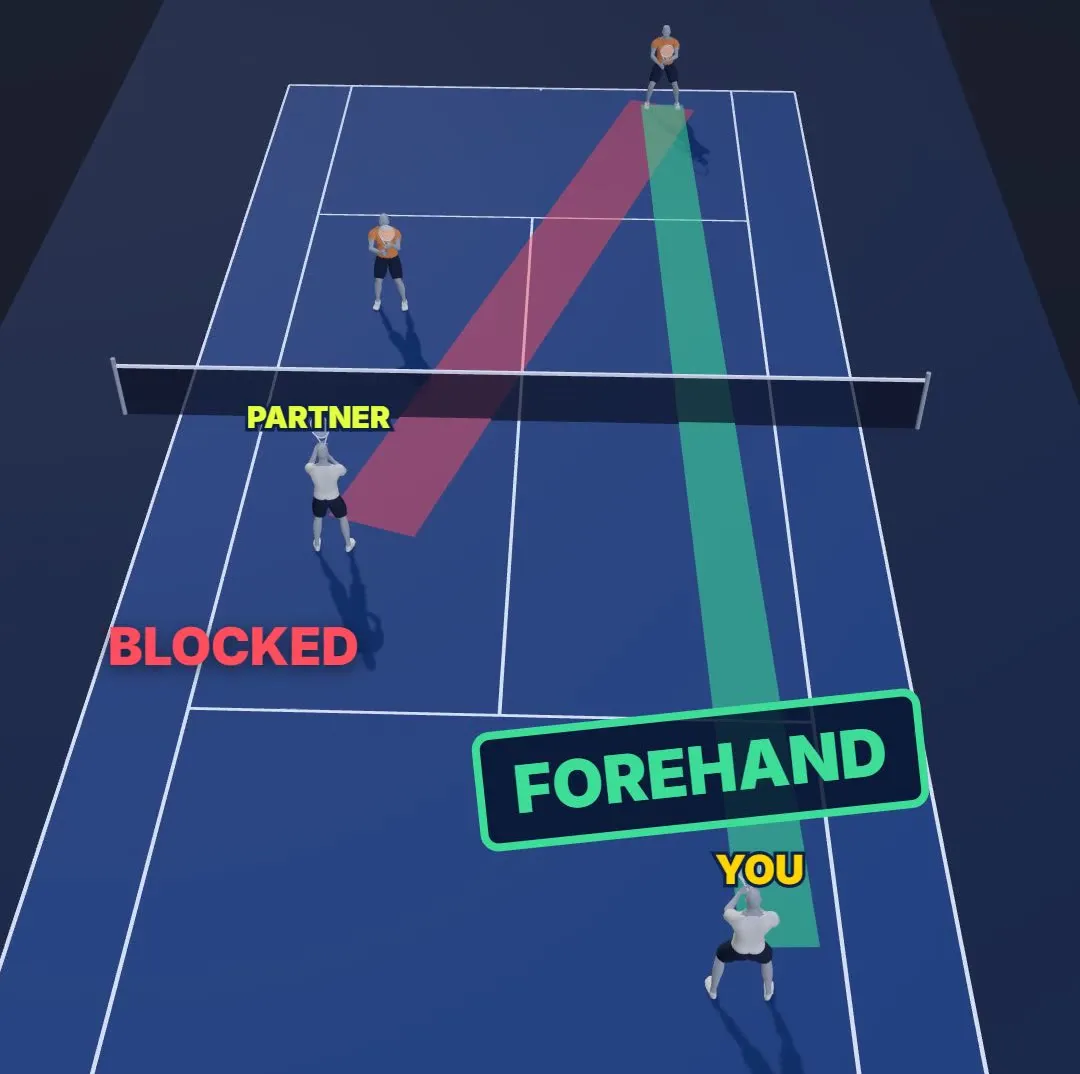
Figure 1. Red: the crosscourt return, now stopped at your partner. Green: the way around, down the line, toward your forehand.
Why would you stand on the same side as your partner?
You’re serving in the ad court. The returner hits the same sharp crosscourt return again and again, and it keeps landing on your backhand.
Tennis Life’s answer is the Australian formation: use it when a strong crosscourt return keeps exploiting your backhand on the ad side.1 Your partner sets up directly across from the opposing net player, and you serve from closer to the middle of the court.2 Both of you are now on the same side of the centre line.
Doesn’t that leave half the court open? It does. First, what you get for it.
What does it take away?
The crosscourt lane now runs straight through your partner (Figure 2). Tennis Life describes it as disabling a strong crosscourt return on the ad side.1 The returner’s way around is down the line, which the same site calls a tougher shot,3 and which sends the ball toward your forehand.1
Now the price. With half the court open, the serve has to carry pace and good placement: deep into the body or out wide, both toward the returner’s backhand.1 In our drawing you then slide across to meet the return on your forehand.
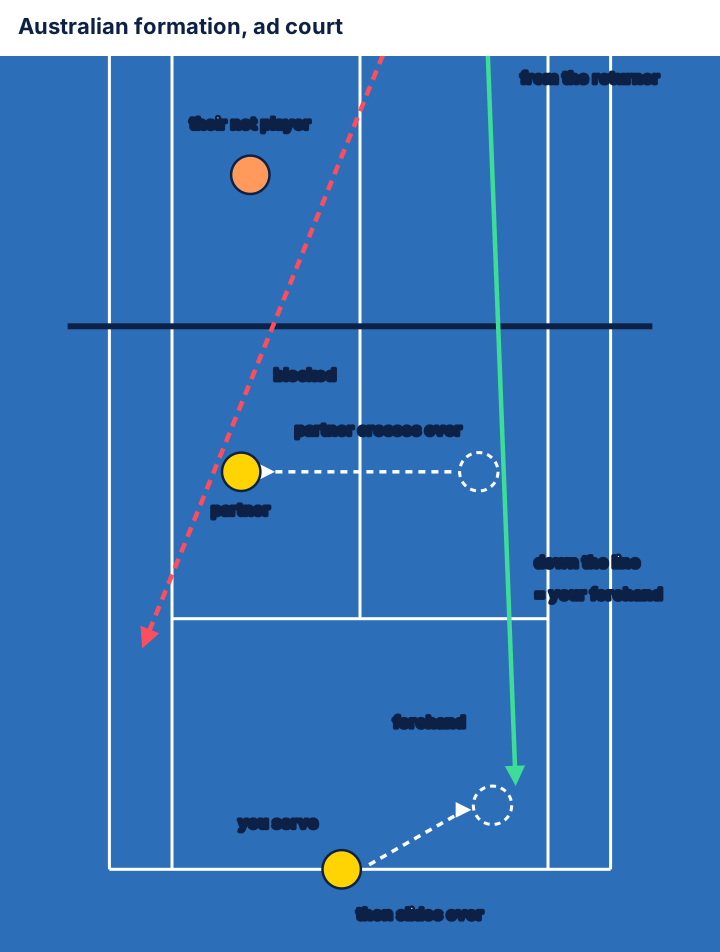
Figure 2. Right-handed server, ad court. Red dashed: the crosscourt return that kept winning. Green: the way around.
So what will a good returner do about it?
How does the returner fight back?
Expect two answers.1 The first is a deep lob over your partner into the ad corner. It forces the net player back, and Tennis Life says the reply is likely to be a shallow backhand lob that the returning side can put away. The second is a sidestep: when a slower serve comes to the backhand or the body, the returner moves over and hits a forehand instead.
Tennis Life calls the Australian formation a more advanced tactic and says to perfect it in practice matches first.1
Three ways the Australian setup gets punished
- Serving it softly. Half the court is open, so a weak serve gets punished.
- Forgetting the lob. Your partner has no answer to a ball over their head; the server and partner must be ready to chase it.
- Debuting it on a big point. Try it in a practice set before it matters.
Try it this week: one practice set
- On every ad-court point, go Australian: partner across from their net player, you serve to the body or wide to the backhand.
- Keep a tally of the returns: crosscourt, down the line, lob.
- If the crosscourts stop and the lobs start, you’ve found the problem you can fix next.
How we drew it
Figure 2 shows a right-handed server in the ad court, with positions taken from our lesson animation. The sources describe the set-up and what it forces; your slide across after the serve is our illustration, not something they spell out.
References
-
Tennis Life (Maria, Team Editor), “The Australian Formation: What It Is, and When, Why, and How To Do It.” Used on the ad side against strong crosscourt returns to a weaker backhand; forces down-the-line returns toward the server’s forehand; serve to the body or wide to the backhand with pace; the returner’s answers (deep lob to the ad corner, sidestep to a forehand); a more advanced tactic to perfect in practice matches. https://tennislifemag.com/the-australian-formation-how-to-make-it-and-break-it/ ↩ ↩2 ↩3 ↩4 ↩5 ↩6
-
Ben Zaiser (USTA National Campus), “Improve Your Game: Australian Formation in Doubles,” USTA, 21 November 2019. The net player sets up directly across from the opposing net player; the server is closer to the middle of the court. https://www.usta.com/en/home/improve/tips-and-instruction/national/improve-your-tennis-game--australian-formation-doubles.html ↩
-
Tennis Life (Maria, Team Editor), “Doubles Strategies to Hold Serve in Tennis,” Australian formation section: a return down the line is a tougher shot to make. https://tennislifemag.com/doubles-strategies-hold-serve/ ↩