Doubles · Attacking patterns
Both opponents at the net: feet or lob?
Your hardest drive is their easiest volley. The wall in front of you has two holes, and where they stand tells you which one is open.
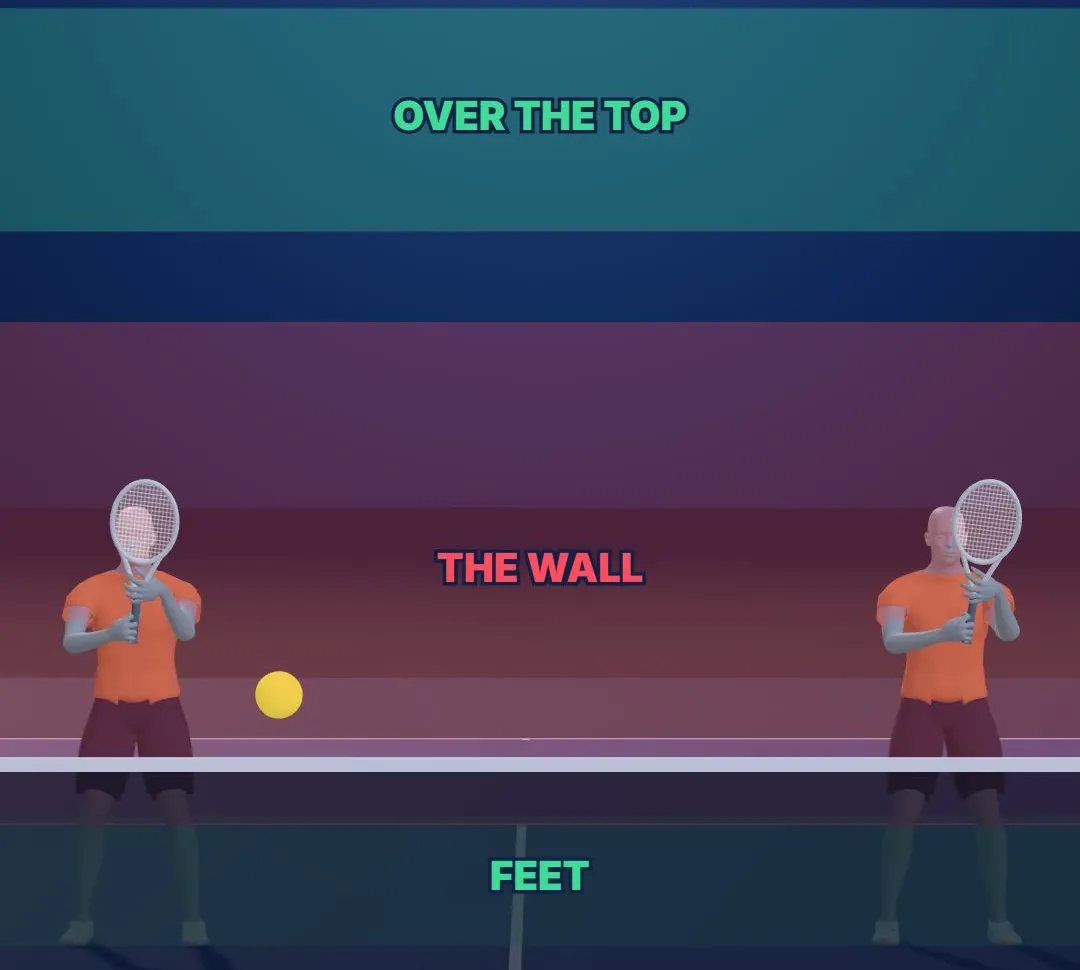
Figure 1. Two players at the net make a wall. Their rackets cover the middle. Look at what they can’t cover.
Why does your best drive come back faster?
You’re on the baseline. Both of them have just stepped in. Every instinct says: hit through them.
Follow that drive. At 120 km/h with topspin, it clears the net by 0.36 m and reaches a volleyer 2 m off the net in 0.49 seconds, still doing 93 km/h, at waist height. They don’t need to swing. They just hold the racket still.
A racket held still sends the ball back at about 40% of its incoming speed when it meets the middle of the strings.1 Your 93 km/h becomes their 37 km/h, aimed wherever you aren’t. You did all the work.
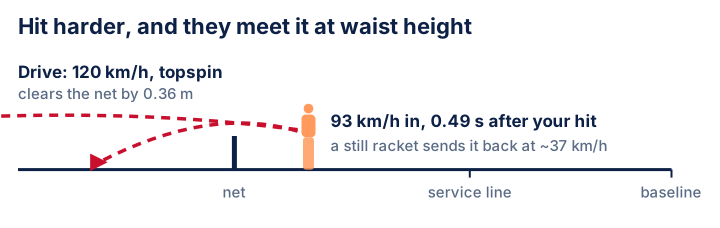
Figure 2. Under half a second, waist height. A block is all they need.
So if power doesn’t get through the wall, what does?
Where are the holes?
Look at Figure 1 again. Their rackets cover the middle. They can’t cover the ground at their feet, and they can’t cover the air above their heads.
Which hole is open depends on one thing: how close they stand. Net players push in when their team is attacking, sit in the middle of the service box when the point is neutral, and back up toward the service line when they’re defending.2 So before you swing, look at their feet, not the ball.
Back near the service line? Make them volley up
From there, a dipping ball lands at their feet. They can’t hit down on it, so they have to lift it. That floater is your point: you and your partner move in and finish it.
No big topspin? You don’t need pace. In our model, an 80 km/h ball with plenty of topspin clears the net by about half a metre, then the spin pulls it down3 and it lands just in front of a player near the service line.
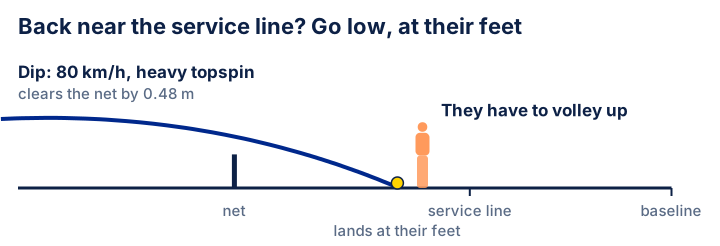
Figure 3. Slower, with more spin. It drops after the net, right at their feet.
Tight to the net? Go over
Up close there’s no room at their feet, but there’s plenty of air. A 70 km/h topspin lob is still 4.1 m up as it passes a player 1.4 m from the net, well above the roughly 3 m they can reach with an overhead without jumping (our estimate).
It lands about 2 m inside the baseline, 8 m behind them, 0.7 seconds after passing over their heads. Behind a player that close, there’s about 10 m of empty court.
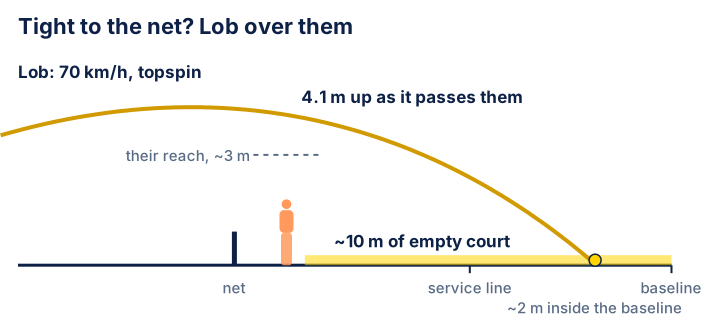
Figure 4. The closer they stand, the more empty court there is behind them.
Four ways to miss the holes
- Answering a block with more pace. If the first drive came back, the harder one will too. Change the height, not the speed.
- A “low” ball that isn’t low. If it reaches them above net height, they hit down on it. Let the spin bring it under.
- A short lob. Anything landing near their service line is a free overhead. Aim deep.
- Admiring the floater. When they volley up, move in with your partner. That ball is the point.
Try it this week: tight or back
Two players at the net, two at the baseline.
- Before each feed, the net pair picks: tight (a racket length from the net) or back (near the service line).
- The baseline player answers with the matching shot: lob against tight, dip against back.
- Play the point out. A point won with the right choice scores 2; any other point won scores 1.
- Swap after 10 balls.
How we got the numbers
The paths come from our ball-flight model, using the drag and topspin-lift coefficients measured by Cross and Lindsey.3 Every shot is hit from 1.0 m high, 0.3 m behind your baseline, with no wind, on an ITF-sized court.4 Drive: 120 km/h, 2,500 rpm, 7 degrees up. Dip: 80 km/h, 3,200 rpm. Lob: 70 km/h, 2,000 rpm. The block uses the 40% rebound above.1 Real shots vary; read the numbers as the shape of each shot, not exact values.
References
-
Rod Cross and Crawford Lindsey, “Racquet Support Method For Testing: Free-standing vs Hand-held,” Tennis Warehouse University, 22 July 2019. They report an apparent coefficient of restitution (rebound speed divided by incoming speed for a racket that isn’t swung) of about 0.4 at the centre of the stringbed. https://twu.tennis-warehouse.com/learning_center/freehandheld.php ↩ ↩2
-
LTA, “Essential doubles tactics and hand signals.” Where the net player stands when attacking, neutral and defending. https://www.lta.org.uk/play/tennis-tips-and-techniques/essential-doubles-tactics-and-hand-signals/ ↩
-
Rod Cross and Crawford Lindsey, “Tennis Ball Trajectories: The Role of Aerodynamic Drag and Lift in Tennis Shots,” Tennis Warehouse University, 22 December 2013. Drag and spin-lift coefficients. https://twu.tennis-warehouse.com/learning_center/aerodynamics2.php ↩ ↩2
-
International Tennis Federation, Rules of Tennis 2026, Rule 1 (The Court): 23.77 m long, net 0.914 m high at the centre, service lines 6.40 m from the net. https://www.itftennis.com/media/7221/2026-rules-of-tennis-english.pdf ↩