Backhand · High backhand
High ball to your backhand: step in, back up or slice?
Strong players swing differently at a high backhand: more shoulder turn, a flatter racket path. Three ways to handle it, and when each one wins.
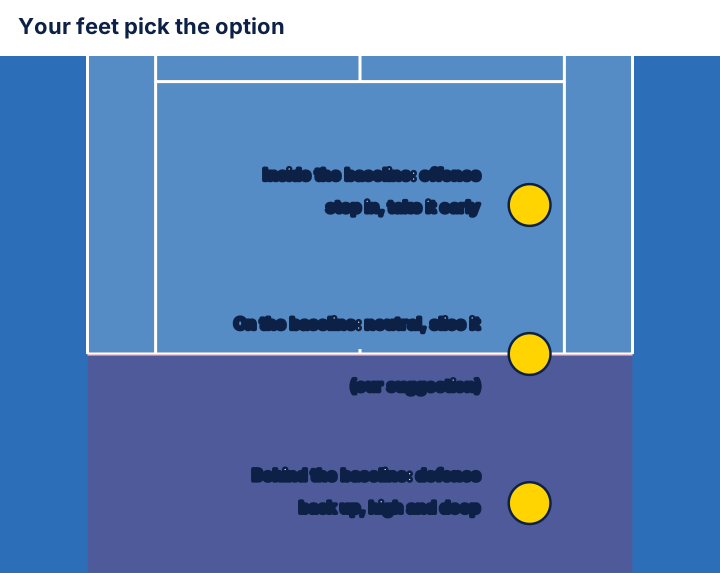
Figure 1. Where you stand picks the option. The slice on the baseline is our suggestion; the rest follows Tennis Australia’s offence, neutral and defence.
What does a high ball do to your swing?
A deep ball kicks up to your backhand shoulder. You can’t hit it where you normally do.
In a high-speed 3D study, high-performance players hit backspin backhands at balls bouncing 5.4 cm below hip height and 41.6 cm above it. For the high ball they held the trunk more upright, turned the racket shoulder further toward the opponent, straightened the front knee, lifted the upper arm away from the body, and brought the racket in on a flatter path.1
So a high backhand isn’t a waist-high one lifted up. It’s a different swing. Do you want to find it, or avoid it?
What does each way out cost?
Step in: you pay in timing
Inside the baseline you are on offence in Tennis Australia’s scheme, and Championship Tennis says offence means standing inside the court to cut your opponent’s recovery time.23 Take the ball at the top of its bounce and you save about 0.32 s, the time it needs to drop half a metre (our calculation).
Back up: you pay in court
In that 0.32 s a ball moving at 50 km/h, our assumption, travels 4.4 m. From 3 m behind the baseline, Championship Tennis wants the ball 2.4 to 3.0 m over the net.3 You are defending: go high and deep.2
Slice: you pay in technique
The slice hits the ball where it is. In the one-handed slice the trunk stays stable at impact whether the ball is at shoulder or hip height,4 and many strong two-handers keep a one-handed slice for variety.4 The USTA’s key: the racket path is high to level, not high to low. A chop sends the ball into the net.5
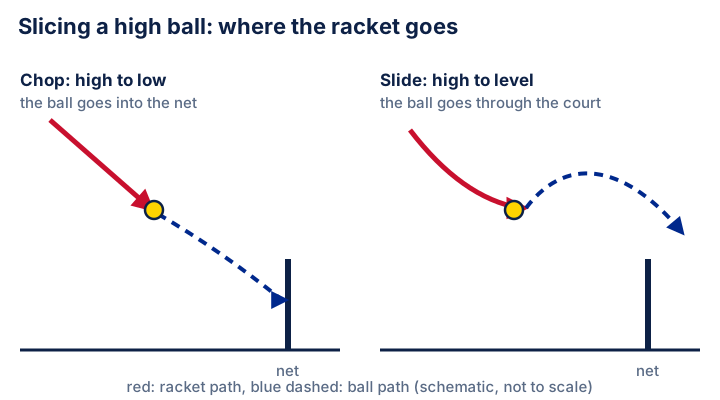
Figure 2. A chop drops the ball into the net. High to level sends it through.
So let your feet choose. Inside the baseline, step in. Behind it, back up and go high and deep. On the baseline with no time for either, slice it (our suggestion).
Three ways the high ball still wins
- Swinging your waist-high swing. The strong players in the study changed theirs.1
- Chopping. High to low is the slice mistake the USTA warns about.5
- Backing up, then hitting flat. From behind the baseline, a flat ball is not what the numbers ask for.3
Try it this week: three feeds
- A partner feeds high balls to your backhand while you stand on the baseline.
- Five balls: step in and take them early, aiming a metre inside the lines.2
- Five balls: slice them. To feel high to level, stand beside the net and slide the racket along the tape, starting above it.5
- Five balls: back up and hit them high and deep. Which one scores best for you?
How we got the numbers
The technique changes come from one high-speed 3D study of high-performance players hitting backspin backhands.1 The 0.32 s is free fall, the square root of 2 × 0.5 ÷ 9.81, ignoring air drag. The half-metre drop (shoulder to waist) and the 50 km/h forward speed are our assumptions.
References
-
Bruce Elliott and Murray Christmass, “A comparison of the high and low backspin backhand drives in tennis using different grips,” Journal of Sports Sciences 13(2):141-151, 1995. Abstract: balls 5.4 cm below vs 41.6 cm above hip height; for the high ball, a more upright trunk, more rotated shoulders, a larger front knee angle, a more abducted upper arm and a less inclined racket path. https://pubmed.ncbi.nlm.nih.gov/7595982/ ↩ ↩2 ↩3
-
Tennis Australia, “Technical Fundamentals” (Coach Development, 2013), Tactical Fundamentals 3 and 8: defensive behind the baseline, neutral on it, offensive inside it; high and deep when taken out of court; safelines a metre inside the lines. https://www.tennis.com.au/wp-content/uploads/2014/11/Technical-and-Tactical-fundamentals-guidelines_low-res.pdf ↩ ↩2 ↩3
-
Frank Giampaolo and Jon Levey, “Reduce your errors on the court by examining zones,” excerpt from Championship Tennis, Human Kinetics. Offence: position inside the court to reduce the opponent’s recovery time; net-clearance heights from 3 m behind the baseline. https://us.humankinetics.com/blogs/excerpt/reduce-your-errors-on-the-court-by-examining-zones ↩ ↩2 ↩3
-
Cyril Genevois, Machar Reid, Isabelle Rogowski and Miguel Crespo, “Performance Factors Related to the Different Tennis Backhand Groundstrokes: A Review,” Journal of Sports Science and Medicine 14(1):194-202, 2015. One-handed slice: stable trunk at impact at shoulder and hip height; two-handers keep a one-handed slice for tactical versatility. https://pmc.ncbi.nlm.nih.gov/articles/PMC4306773/ ↩ ↩2
-
Karl Davies, “Improve Your Game: Tips for Your Backhand Slice,” USTA, 9 July 2018. Racket path high to level, not high to low, which chops the ball into the net; net-side drill. https://www.usta.com/en/home/improve/tips-and-instruction/national/improve-your-tennis-game--tips-for-improving-your-backhand-slice.html ↩ ↩2 ↩3