Backhand · Down the line
Backhand down the line: right shot, wrong ball?
Down the line crosses a net 10 cm higher and a court 1.4 m shorter than crosscourt. Three signs tell you the ball is worth the risk.
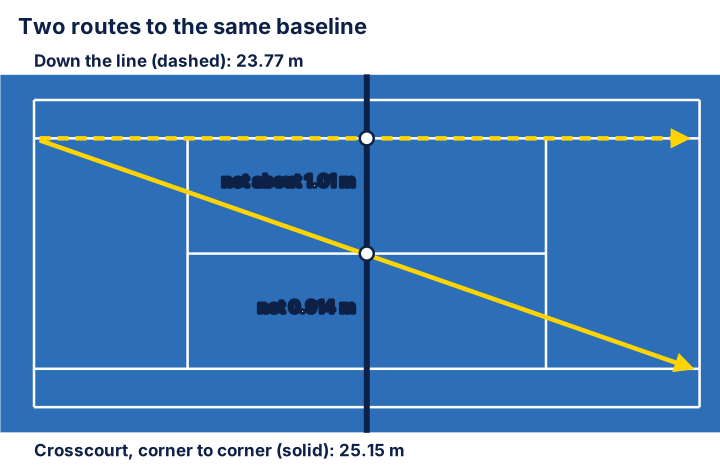
Figure 1. Same start, two routes. The line is 1.4 m shorter and crosses a higher part of the net.
Why does the line keep punishing you?
The whole court is open down the line. You go for it, and the ball clips the tape or sails long.
Two numbers explain it. The net is 0.914 m high at the centre and 1.07 m at the posts,1 so a ball down the line crosses about 1.0 m up, roughly 10 cm higher than a crosscourt over the centre strap (our straight-line estimate). And the court is shorter: 23.77 m baseline to baseline, against 25.15 m corner to corner.1
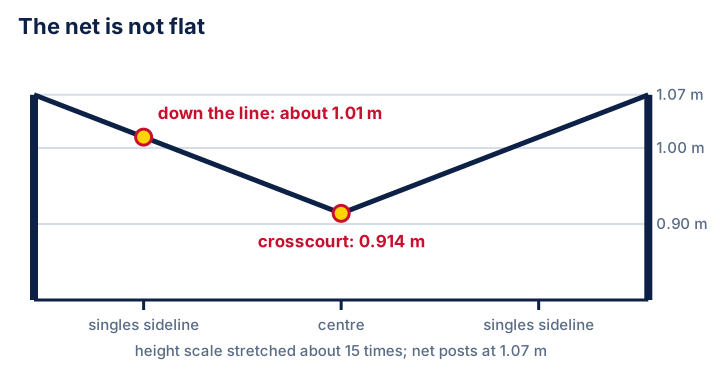
Figure 2. Crosscourt goes over the lowest part of the net.
Now the sting. Hit your usual crosscourt, then point the same swing down the line. In our model a 100 km/h topspin crosscourt that lands 1 m inside the baseline lands 0.4 m long.2
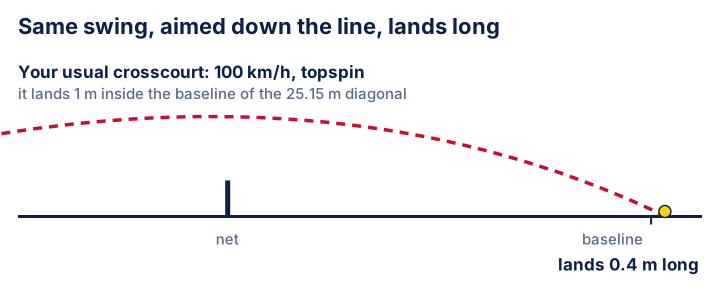
Figure 3. Same swing, same ball, 1.4 m less court.
So which ball is worth the risk?
Three signs the ball is on
- Your feet are inside the baseline. Tennis Australia says to change direction only from an excellent court position, both feet inside the court. Behind the baseline, go crosscourt over the lowest part of the net.3
- The ball is yours to attack. Waist-high, and landed in the middle zone, about 4 to 8 m inside your baseline. From there you can build or attack; from the zone by your baseline, resist the urge.4
- They were just pulled wide. A very common play is crosscourt first, then the next ball down the line into the space you opened.5 Tennis Australia lists “backhand cross court and aggressive down the line” as a winning pair.3
The warning sign is a deep crosscourt coming at you. Changing direction off that ball raises the chance of error.3
Where exactly do you aim?
A metre inside the sideline, not at the paint. Tennis Australia’s “safeline” rule: a metre inside the lines cuts errors and still builds pressure.3
Three ways the line shot misses
- Going for it from behind the baseline. You have the higher net and the shorter court. Take the crosscourt.
- Aiming at the line. A metre of margin costs you little and saves you a lot.
- Using your crosscourt swing. It is 0.4 m long before you even aim.
Try it this week: crosscourt, crosscourt, line
- Rally crosscourt backhands with a partner.
- When a ball sits up waist-high inside your baseline, go down the line to a target a metre inside the sideline.
- Land in the strip: 2 points. Any other ball in: 1 point.
- Play to 11, then swap.
How we got the numbers
Court and net sizes are from the ITF rules.1 Net height at the singles sideline is our straight-line estimate between 0.914 m at the centre and 1.07 m at the post (1.01 m with a doubles net, 1.04 m with singles sticks). The 0.4 m comes from our ball-flight model:2 hit from 1.0 m high, 0.3 m behind the baseline, 100 km/h with 2,500 rpm of topspin, aimed to land 1 m inside the baseline along the diagonal. At 90 and 110 km/h it is 0.38 and 0.36 m. Treat it as a guide.
References
-
International Tennis Federation, Rules of Tennis 2026, Rule 1 (The Court): 23.77 m long, 8.23 m wide for singles, net 0.914 m high at the centre and 1.07 m at the posts or singles sticks. https://www.itftennis.com/media/7221/2026-rules-of-tennis-english.pdf ↩ ↩2 ↩3
-
Rod Cross and Crawford Lindsey, “Tennis Ball Trajectories: The Role of Aerodynamic Drag and Lift in Tennis Shots,” Tennis Warehouse University, 22 December 2013. Drag and spin-lift coefficients used in our ball-flight model. https://twu.tennis-warehouse.com/learning_center/aerodynamics2.php ↩ ↩2
-
Tennis Australia, “Technical Fundamentals” (Coach Development, 2013), Tactical Fundamentals 3, 4 and 7: limit directional changes (feet inside the court, crosscourt from behind the baseline), safelines a metre inside the lines, “backhand cross court and aggressive down the line”. https://www.tennis.com.au/wp-content/uploads/2014/11/Technical-and-Tactical-fundamentals-guidelines_low-res.pdf ↩ ↩2 ↩3 ↩4
-
Frank Giampaolo and Jon Levey, “Reduce your errors on the court by examining zones,” excerpt from Championship Tennis, Human Kinetics. Waist-level strike zone; grind, torment and obliterate zones and the shots that suit each. https://us.humankinetics.com/blogs/excerpt/reduce-your-errors-on-the-court-by-examining-zones ↩
-
Joey Rive and Scott C. Williams, “Strategies give players a competitive edge,” excerpt from Tennis Skills & Drills, Human Kinetics. Crosscourt first, then the next ball down the line; hitting into the open court. https://us.humankinetics.com/blogs/excerpt/strategies-give-players-a-competitive-edge ↩