Rules & etiquette · Net and body
Their drop shot spun back over the net. Can you reach it?
You may reach over the net to hit a ball on their side. Two things lose the point, and one of them is doing nothing.
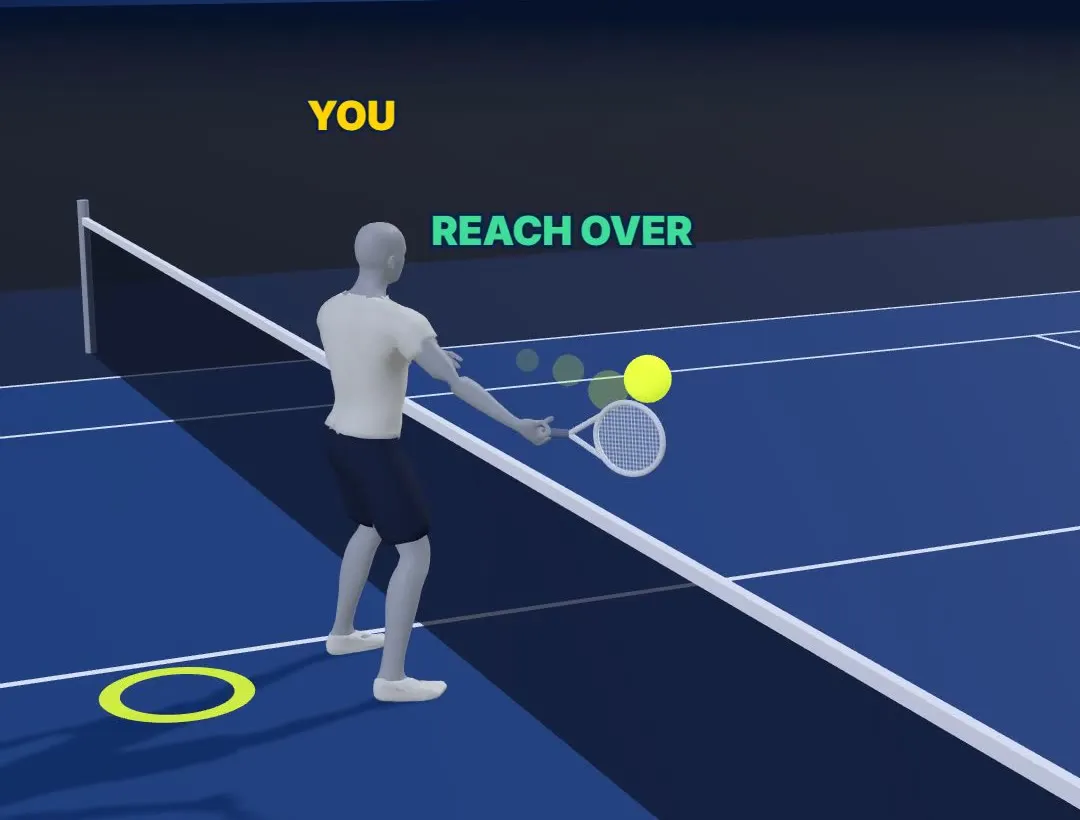
Figure 1. From our lesson’s 3D scene: the racket goes over the net, and the ball is hit on their side.
Is a ball that spun back over the net already lost?
Their drop shot lands on your side of the net. Heavy backspin makes it bounce backwards, and it creeps back across the net into their court. You’re a few strides away. Surely it’s gone?
Not yet. If the ball has hit the ground in the correct court and then spins or blows back over the net, you may reach over the net and play it into their court.1 So your arm and your racket are allowed to cross the net. They only have to clear the top of it, which is 0.914 m high in the middle.2
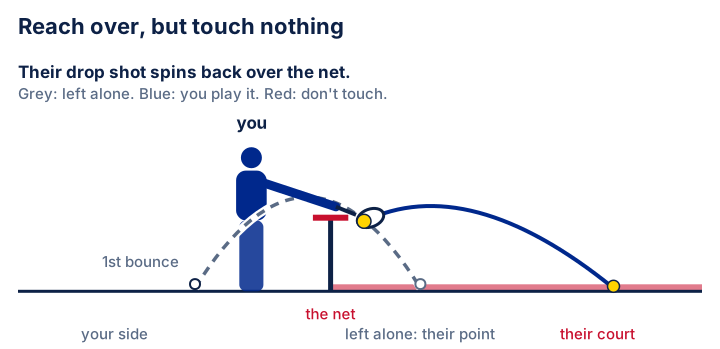
Figure 2. Left alone, the ball comes down on their side. Reached over and hit, it’s your shot. A sketch, not a simulation.
Leave it, and it comes down on their side. That is a second bounce before you returned it, and the point is theirs.3
So you run for it. What can go wrong on the way?
What loses the point while you reach?
Touch the net, its posts, the cord, the strap or the band, or touch their court, with your body, your racket or anything you wear or carry, and you lose the point. It counts at any time while the ball is in play, so your follow-through counts too. Even a racket that slips out of your hand and touches the net costs you the point.3
And if your opponent gets in your way as you reach? Rule 26 decides. If they did it on purpose, you win the point. If it was an accident, you replay it.4
Three ways to lose the reach
- Waiting to see where it lands. By then it’s their second bounce. Go the moment you see it turn back.
- Reaching for a ball that never bounced on your side. Rule 25(b) needs that first bounce in your court. Without it, hitting a ball before it has passed the net loses the point.3
- Jumping over after it. Jumping over the net into their court while the ball is in play loses the point.3
References
-
International Tennis Federation, Rules of Tennis 2026, Rule 25(b) (A Good Return), p. 11: after the ball in play has hit the ground within the correct court and has spun or been blown back over the net, the player may reach over the net and play the ball into the correct court, provided the player does not break Rule 24. https://www.itftennis.com/media/7221/2026-rules-of-tennis-english.pdf ↩
-
International Tennis Federation, Rules of Tennis 2026, Rule 1 (The Court), p. 2: the net is 0.914 m high at the centre. https://www.itftennis.com/media/7221/2026-rules-of-tennis-english.pdf ↩
-
International Tennis Federation, Rules of Tennis 2026, Rule 24 (Player Loses Point), p. 10: (b) not returning the ball before it bounces twice consecutively; (g) the player, the racket or anything worn or carried touching the net, posts, cord or cable, strap or band, or the opponent’s court at any time while the ball is in play, whether the racket is in the player’s hand or not; (h) hitting the ball before it has passed the net. Case 1, p. 10: a racket that falls out of the server’s hand and touches the net while the ball is in play loses the point. Case 5, p. 11: jumping over the net into the opponent’s court while the ball is in play loses the point. https://www.itftennis.com/media/7221/2026-rules-of-tennis-english.pdf ↩ ↩2 ↩3 ↩4
-
International Tennis Federation, Rules of Tennis 2026, Rule 26 (Hindrance), p. 12: a deliberate act of the opponent that hinders you wins you the point; an unintentional one means a replay. Appendix VII, Case 8, p. 29, applies this to a ball blown back over the net that the player correctly reaches over to play. https://www.itftennis.com/media/7221/2026-rules-of-tennis-english.pdf ↩