Rules & etiquette · In or out
Their ball is 99% outside the line. Out, right?
The court is measured to the outside of the lines, which makes the line itself part of the court. Here is what that means for your closest calls.
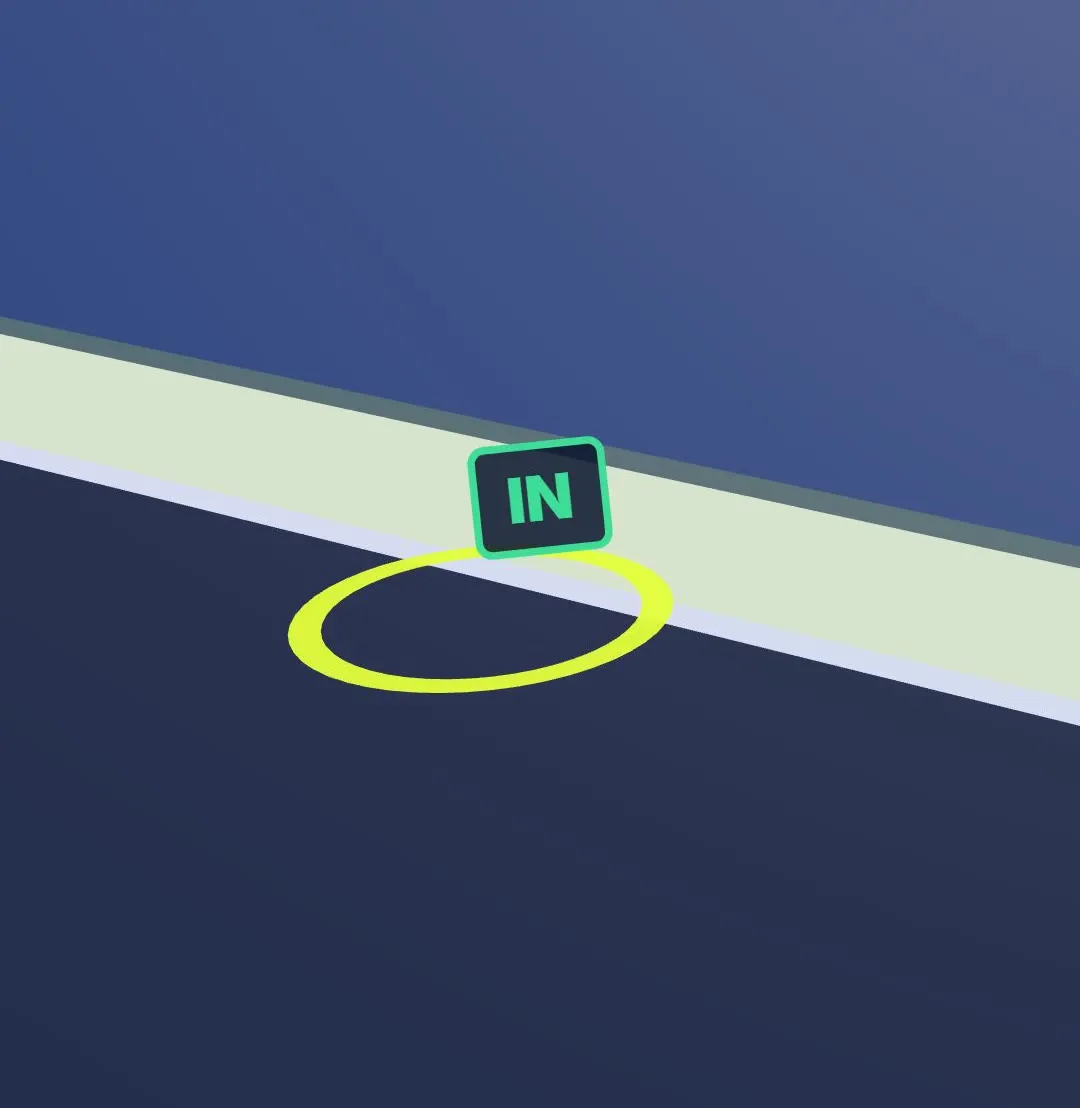
Figure 1. The yellow ring is where the ball touched down. It only just overlaps the line, and that is enough: in.
Your opponent’s forehand lands. From where you stand, almost the whole ball is outside the baseline and only a sliver touches the paint. Out? No. It’s good, even if the ball is 99% out.1
Rule 12 is one sentence: a ball that touches a line is regarded as touching the court that line bounds.2 So why does a strip of paint count as court?
Why is the line part of the court?
Because Rule 1 measures the court to the outside of the lines.2 The 23.77 m length and the 10.97 m width both include the lines, so the edge of the court is the outer edge of each line. Lines are 2.5 to 5 cm wide, and a baseline may be up to 10 cm wide.2
That makes the closest ball that is still in one that touches only the outer edge of the line. How much of the ball has to get there?
How much of the ball has to touch?
Any part of it, says the USTA’s Code, the players’ guide for matches without officials.1 It gives you the other half too: you may call a ball out only if you clearly see space between where it hit and the line.1
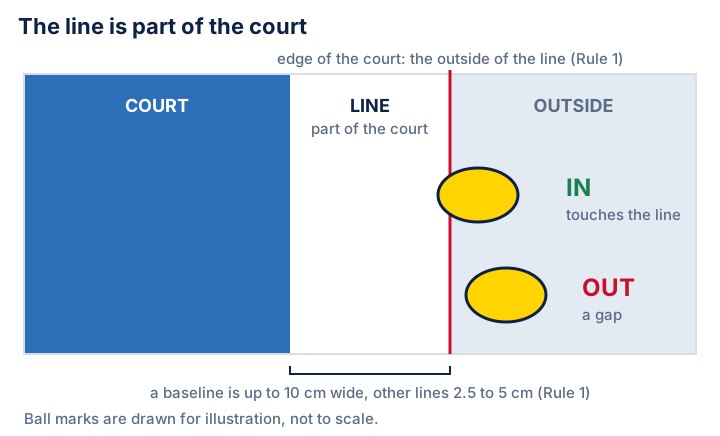
Figure 2. A line from above. Overlap it by a hair and the ball is in; leave a gap and it is out.
On clay the mark decides. If any part of the mark touches the line, the ball is good. If you can see only part of a mark, the rest of it is on the line or the tape.1
Four calls that go wrong
- Judging by how much of the ball is out. It isn’t a percentage game: any contact is in.
- Measuring to the inner edge. The court ends at the outer edge of the line, and a baseline can be 10 cm wide.
- Calling it “probably out”. If you can’t see space between the ball and the line, the ball is good.1
- Asking for a replay. “I didn’t see it, let’s play a let” is not allowed. A ball you can’t call out is good.1
References
-
United States Tennis Association, Friend at Court 2026, Part 2 “The Code” (the players’ guide for matches without officials): item 7 (a ball touching any part of a line is good; call it out only if you clearly see space between the ball and the line), item 8 (a ball that cannot be called out is good; no let for not seeing it) and item 21 (ball marks on clay). https://www.usta.com/content/dam/usta/coach-organize/content-fragments/resource-library/assets/pdfs/friend-at-court.pdf ↩ ↩2 ↩3 ↩4 ↩5 ↩6
-
International Tennis Federation, Rules of Tennis 2026: Rule 12 (if a ball touches a line, it is regarded as touching the court bounded by that line) and Rule 1 (all court measurements are made to the outside of the lines; the court is 23.77 m long and 10.97 m wide for doubles; lines are 2.5 to 5 cm wide, baselines up to 10 cm). https://www.itftennis.com/media/7221/2026-rules-of-tennis-english.pdf ↩ ↩2 ↩3