Rules & etiquette · Serve rules
Your doubles serve lands in the alley. In or fault?
In doubles you may stand wider to serve, but the ball can't land any wider. Here is where the service box really ends, and when the alley comes into play.
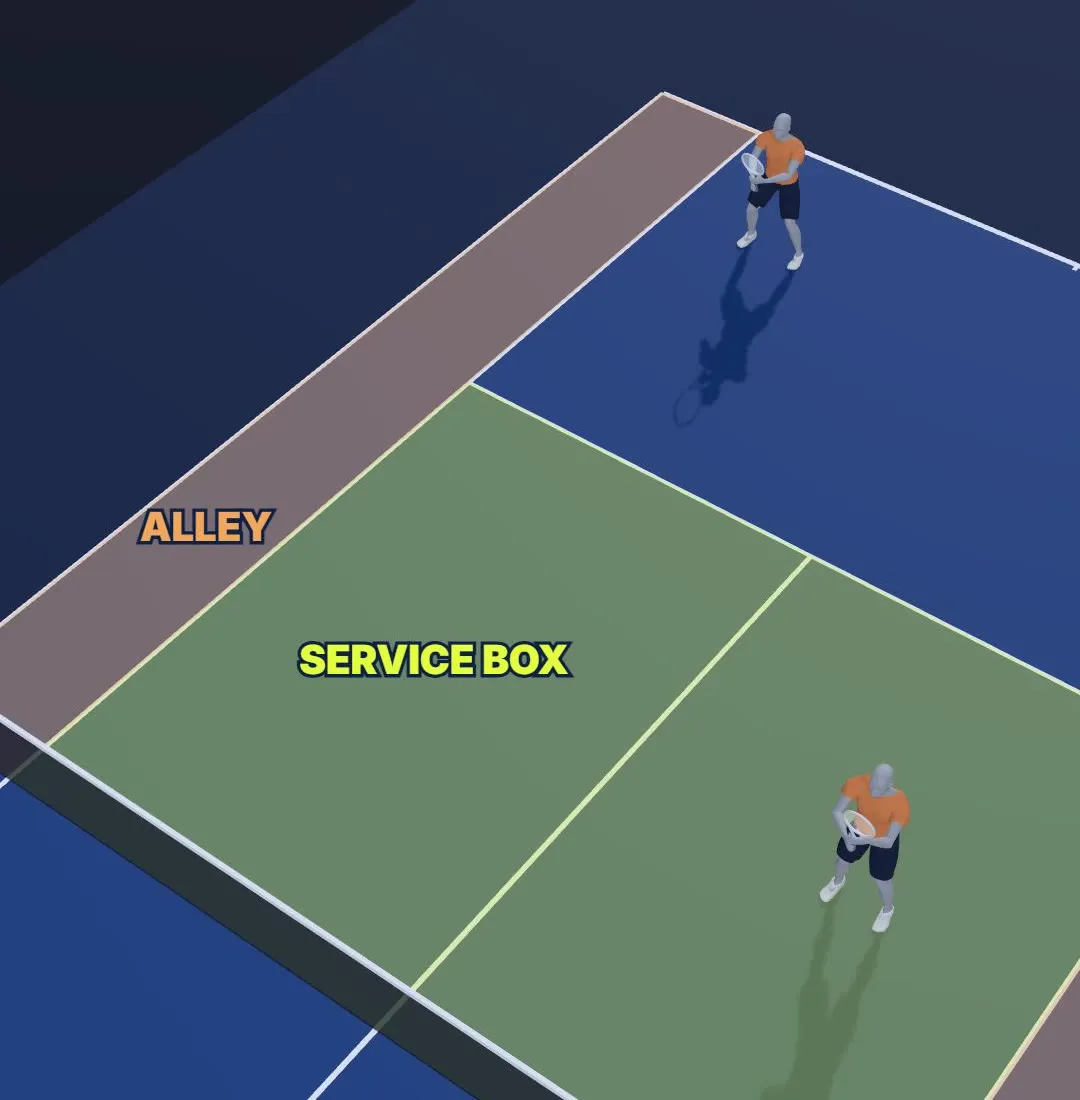
Figure 1. The green box is where a doubles serve has to land. The grey strip beside it is the alley.
Your doubles serve kicks out wide in the deuce court and bounces just outside the singles sideline, still inside the doubles line. Your partner at the net says, “It’s doubles, it’s good.” It isn’t. It’s a fault.
Why isn’t the alley part of the service box?
Because Rule 1 draws the service lines between the singles sidelines and splits the space in front of them into two service courts.1 Each service court is 6.40 m deep and about 4.1 m wide, half of the 8.23 m singles width, whatever kind of match you are playing. The alley is the 1.37 m strip between the singles and doubles sidelines.1
A serve has to hit the service court diagonally opposite (Rule 17), and a serve that breaks Rule 17 is a fault (Rule 19).1 The singles sideline itself belongs to the box: a serve that touches it is good (Rule 12).1
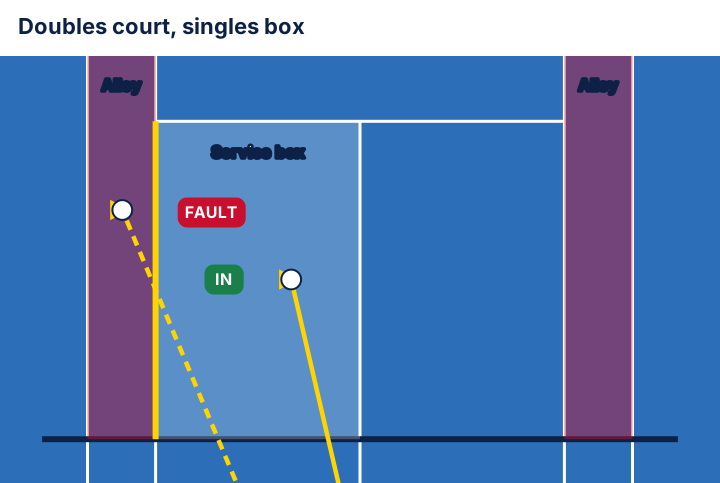
Figure 2. Two serves from the same spot. The yellow line is the singles sideline, the edge of the box. Touch it and the serve is good; miss it by a hair and it is a fault.
So what is the alley for in doubles?
Then what is the alley for?
Two things. First, where you stand: a doubles server may stand behind the baseline as far out as the doubles sideline, which a singles server may not (Rule 18, Case 1).1 Second, the rally. Once the serve is in, the whole doubles court is in play. Rule 1 makes it 10.97 m wide, so a rally ball that lands in the alley is good.1
The same strip of court is fine in a rally and a fault for a serve.
Three ways the alley catches you out
- Aiming for the doubles sideline. The target is the singles sideline. Aim a little inside it, because a serve that misses it by a hair lands in the alley.
- Calling it from the net. The receiving side calls a first serve: the receiver takes the sideline and the centre line, the receiver’s partner takes the service line. The serving side generally stays out of first-serve calls, but must call a second serve it clearly sees out.2
- A “safe” wide second serve. An alley ball is a fault like any other, and two faults in a row lose the point (Rule 24).1
Try it this week: serve to the singles line
- Put a cone or a towel on the far deuce box, just inside the singles sideline.
- Serve ten wide balls at it.
- Count how many land in the alley. Zero is the goal. Then repeat in the ad box.
References
-
International Tennis Federation, Rules of Tennis 2026: Rule 1 (service lines drawn between the singles sidelines, the two service courts, doubles court 10.97 m wide, the 1.37 m alley also in Appendix X), Rule 12 (a ball touching a line), Rules 17 and 19 (the serve must hit the service court diagonally opposite; otherwise a fault), Rule 18 Case 1 (where a doubles server may stand), Rule 24(a) (two consecutive faults lose the point). The 4.1 m and 1.37 m widths are our arithmetic from the Rule 1 sizes. https://www.itftennis.com/media/7221/2026-rules-of-tennis-english.pdf ↩ ↩2 ↩3 ↩4 ↩5 ↩6 ↩7
-
United States Tennis Association, Friend at Court 2026, Part 2 “The Code” (the players’ guide for matches without officials): items 25 and 26 (who calls a serve in doubles). https://www.usta.com/content/dam/usta/coach-organize/content-fragments/resource-library/assets/pdfs/friend-at-court.pdf ↩